Many factories run their air compressors in a "pressure-reduced" mode. Production actually needs only 0.3–0.45 MPa of air pressure, yet a 0.7–0.8 MPa machine is installed and the pressure is then reduced through a pressure-reducing valve. The pressure comes down, but the extra electricity consumed does not come back — compressing the same volume of gas to a higher pressure level itself takes more energy.
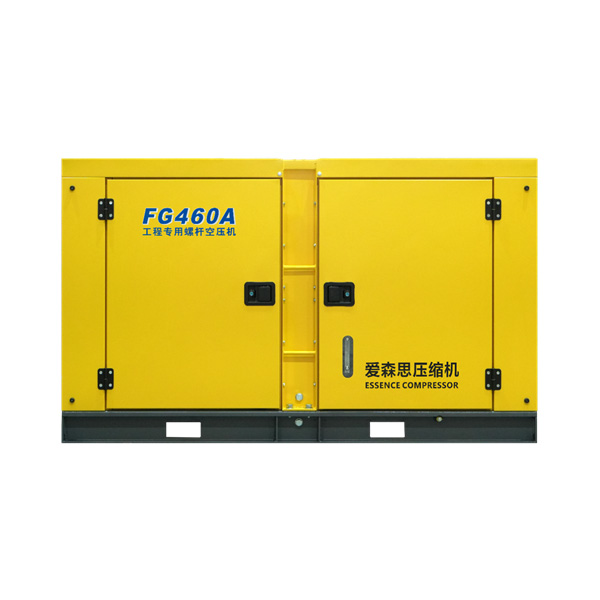
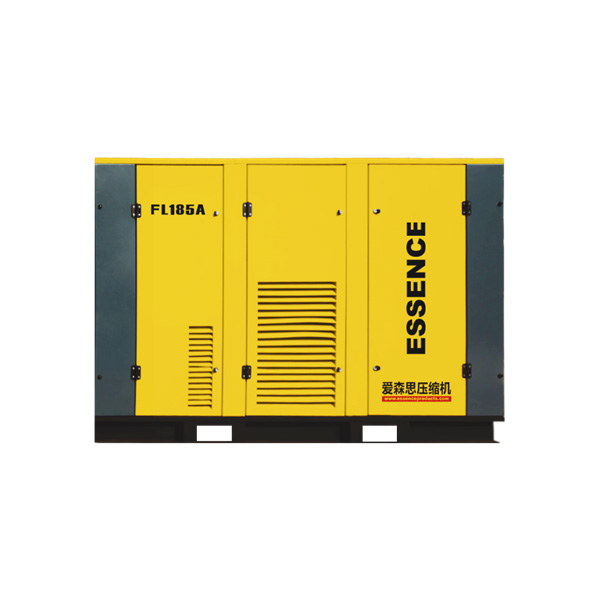
The ESSENCE FL Series low-pressure screw air compressor corrects this at the source. With a working pressure of 0.3–0.45 MPa, air delivery of 6.0–50.8 m³/min and a power range of 30–220 kW, it designs the airend directly for low-pressure duty, covering models such as FL30A, FL37A and FL37A-3 through FL160A-3.
An air compressor's energy consumption is closely tied to discharge pressure: the higher the pressure level, the greater the energy consumed per unit of air. When the point of use does not need such high pressure, the excess, from being generated to being bled off by the pressure-reducing valve, consumes electricity the whole way. This waste never shows up on any bill, yet it accumulates with running hours. The point of a low-pressure model is to align the equipment's output pressure with the true needs of the process — not to weaken the machine, but to spare it from doing useless work. The more clearly this is calculated, the more obvious the value of a low-pressure solution.
It should be noted that a low-pressure machine is not simply a high-pressure machine with the pressure turned down. A screw airend's rotor profile, speed and flow matching under low-pressure duty all involve different considerations, and only a design made specifically for low-pressure parameters can deliver greater air delivery at the same power. The FL Series sets its working pressure at 0.3–0.45 MPa around exactly this goal of low pressure and high flow, which is its most fundamental difference from general high-pressure models. In other words, a low-pressure model solves the problem of putting energy where it counts: since the process needs only low pressure, there is no reason to compress the air to high pressure first and then bleed it off.
From the specifications, the FL Series spans a very wide air delivery range of 6.0–50.8 m³/min, with power extending from 30 kW all the way to 220 kW. FL30A and FL37A correspond to three pressure levels of 0.35/0.4/0.45 MPa, while FL37A-3 through FL160A-3 operate at 0.3 MPa. This layout of one series with multiple pressure points lets users select precisely according to their process's true pressure needs, without paying for a pressure level they will never use. For a factory with a medium air demand, this range makes cross-series selection unnecessary.
Low-pressure air has a wider range of applications than many people imagine. Every situation with a large air demand and modest pressure requirements is a fit for a low-pressure model: material conveying, mixing, blow-off and aeration often care more about whether the air volume is sufficient than whether the pressure is high enough. In these scenarios, a low-pressure, high-flow configuration matches the process rhythm better and avoids the inefficiency of high-pressure equipment running at a low flow range for long periods. For such processes, the priority when selecting is the air delivery curve, not the pressure ceiling.
To judge whether a low-pressure model is needed, start with a simple self-check: list the points of use that genuinely require above 0.6 MPa and see what share they represent. If the vast majority of processes run below 0.45 MPa, then the extra pressure level of the existing high-pressure model is being wasted over the long run.
Conversely, if high-pressure points of use really do exist in the workshop, split-pressure air supply should be considered — letting high-pressure and low-pressure equipment each handle their own section rather than one high-pressure machine covering everything. Split-pressure supply often lowers running costs more than simply replacing the equipment with a larger unit, and it makes it easier to manage the air needs of different processes separately.
| Item | Specification |
|---|---|
| Working pressure | 0.3 – 0.45 MPa |
| Air delivery | 6.0 – 50.8 m³/min |
| Power range | 30 – 220 kW |
Energy saving has never been only about switching equipment to VSD; it also means aligning the equipment's output with actual demand. By setting the working pressure at 0.3–0.45 MPa and covering low-pressure air scenarios with a wide 6.0–50.8 m³/min flow range, the FL Series offers a more direct way to save power for processes that never needed high pressure in the first place.
| kW/HP | MPa m³/min dB(A) L×W×H kg |
|---|---|
| Working Pressure | 0.3~0.45 MPa; air delivery 6.0~50.8 m³/min; power range 30~220 kW |
| Working Pressure | 0.3~0.45 MPa |
| Air Delivery | 6.0~50.8 m³/min |
| Power Range | 30~220 kW |




Give us your working pressure, air demand and site conditions, and we will confirm the model and configuration