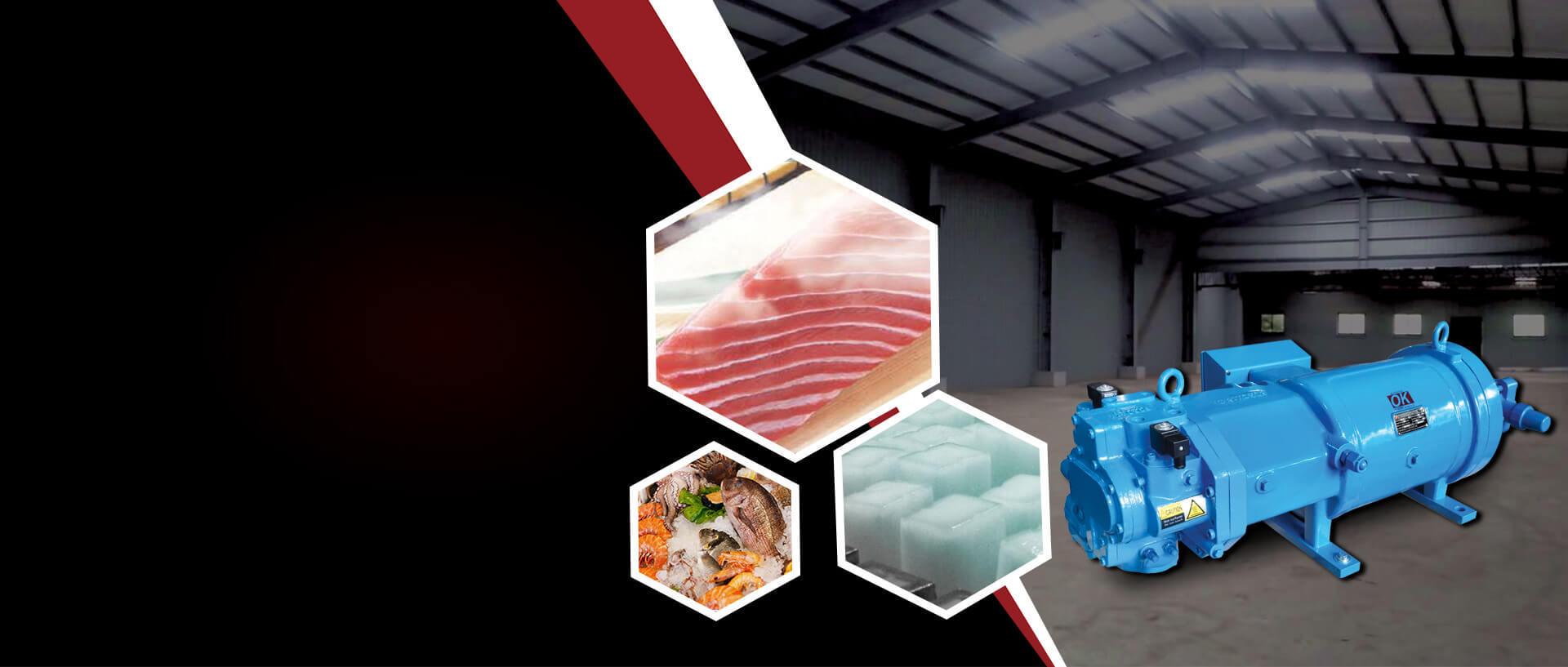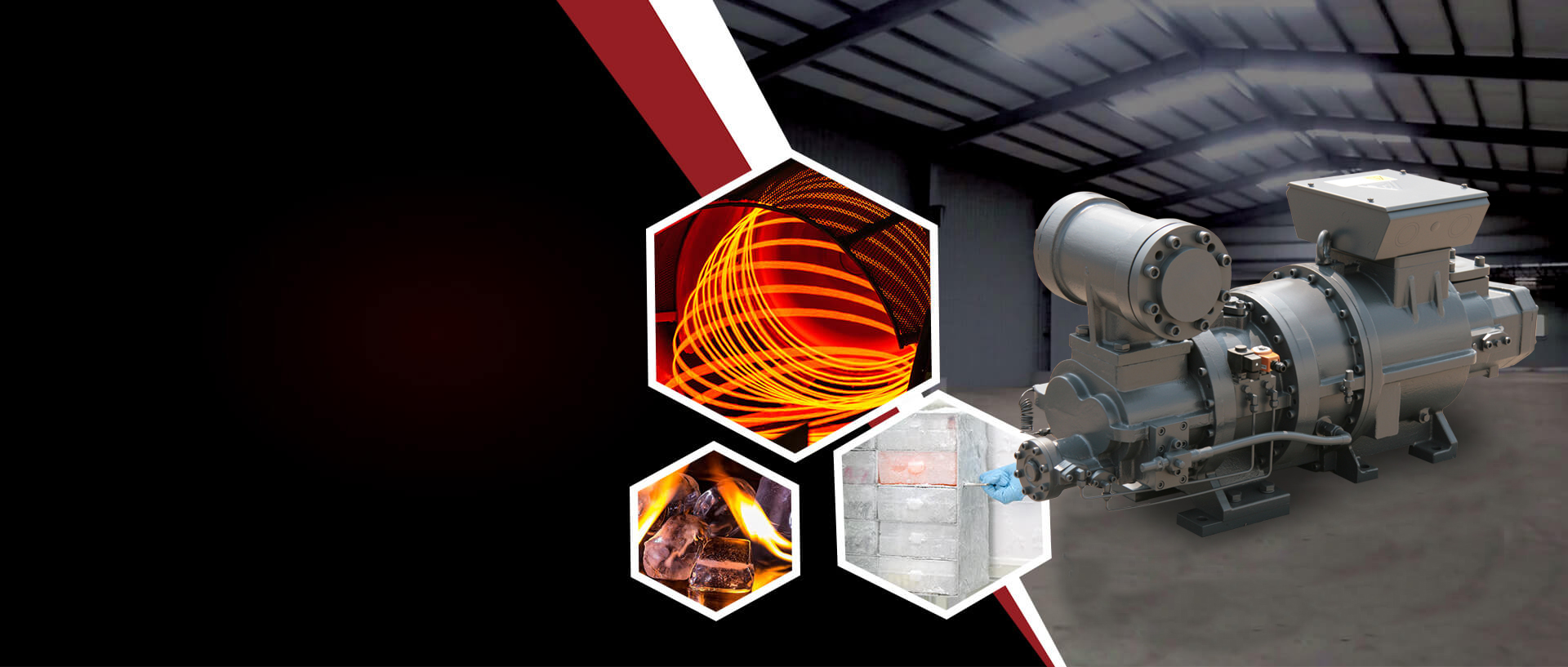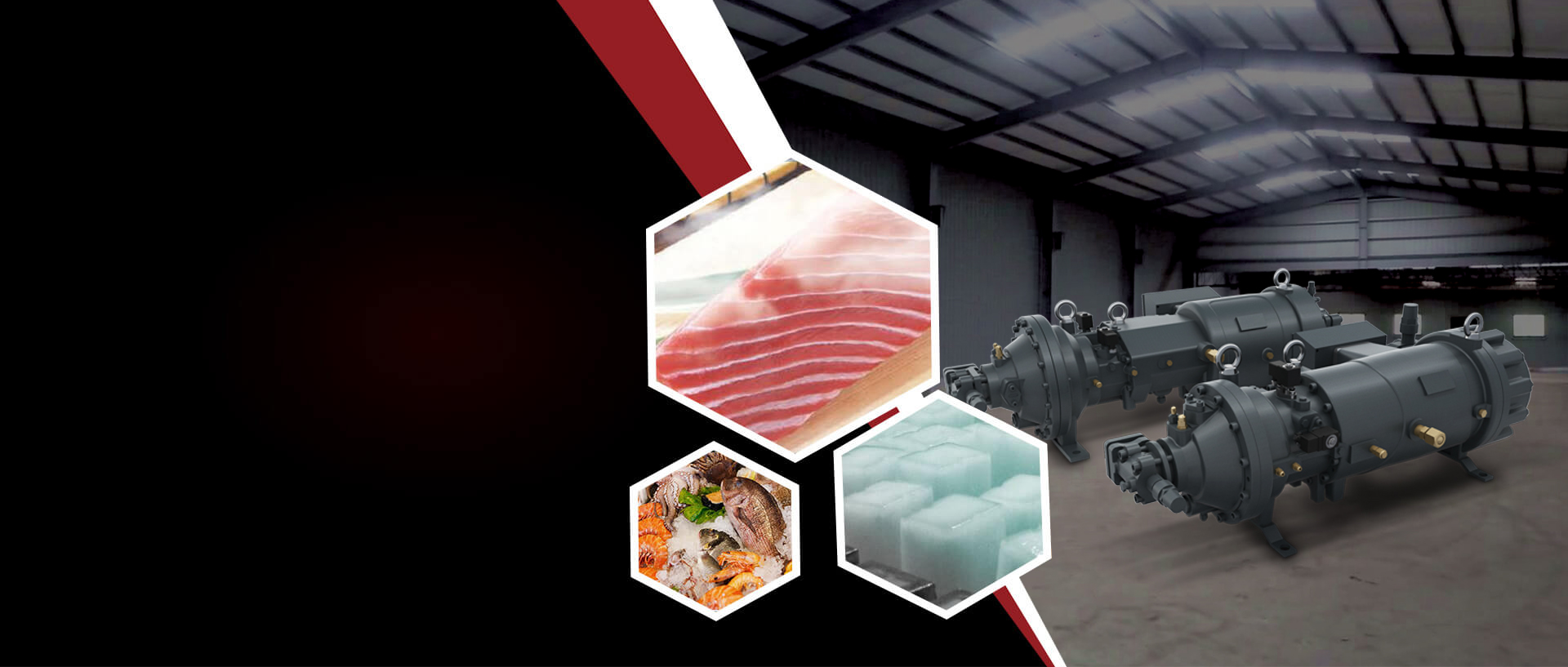
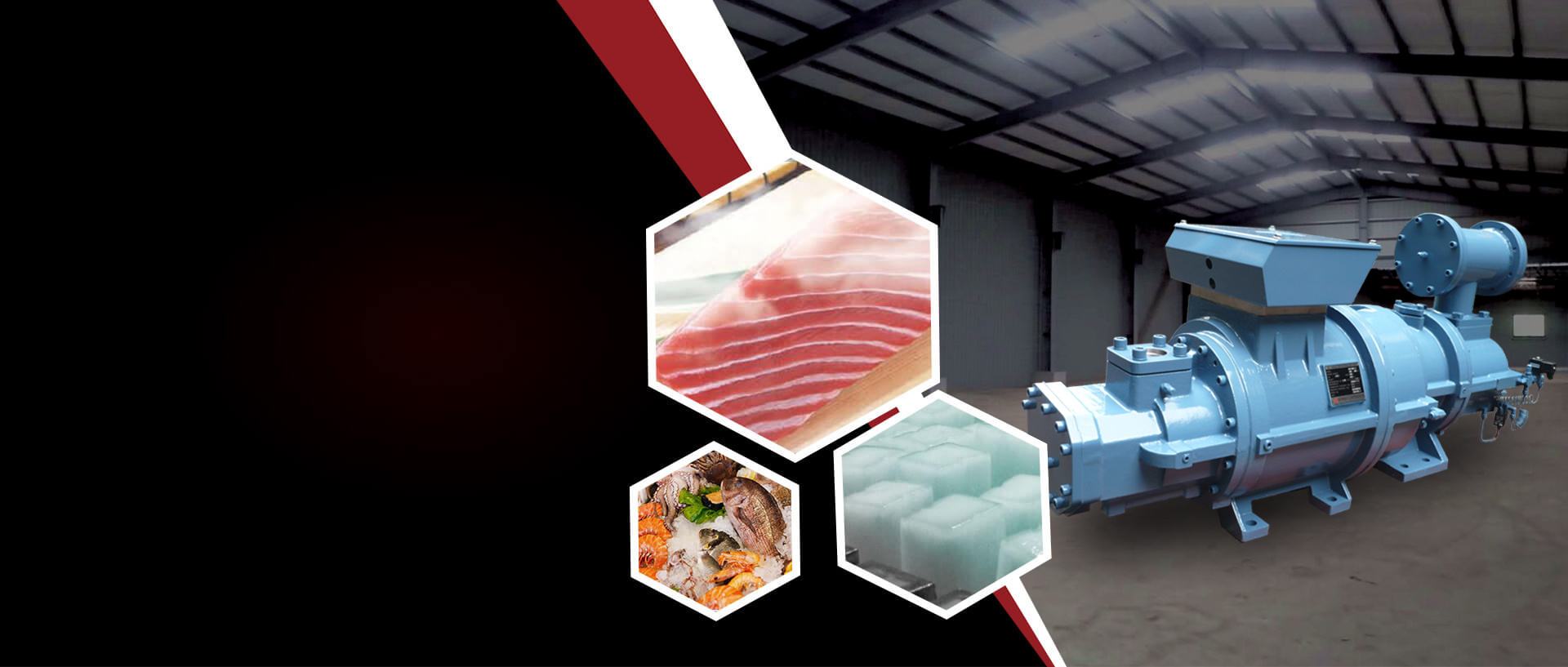
In cold-chain logistics, large cold storage, food quick-freezing and industrial process cooling, the compressor is the heart of the refrigeration system. It determines how low a unit can pull the evaporating temperature, how much cooling capacity it can cover, and whether long-term continuous operation will be stable and trouble-free. When a project moves from small-to-medium cooling loads to large cold storage or a centralised cooling station, a single compressor is often not enough: how to coordinate multiple units and how to keep noise and vibration under control become questions that both design and operation have to answer.
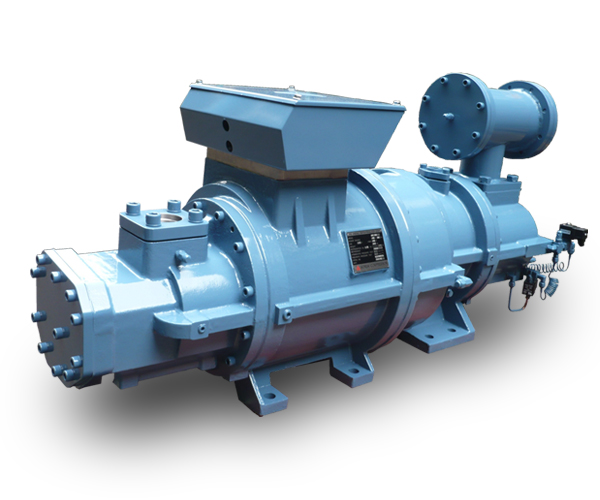
The Fusheng SDL Series screw refrigerant compressor is a product line built for exactly these needs. Based on a two-stage compression structure, it covers a displacement of 120–655 m³/hr, supports R22, R404A and R507 refrigerants, reaches an evaporating temperature of -60°C under R22 conditions and -65°C under R404A conditions, and supports multi-unit parallel operation and VSD applications. For refrigeration projects that need large cooling capacity while keeping the system as simple and reliable as possible, it is a model worth including in the plan.
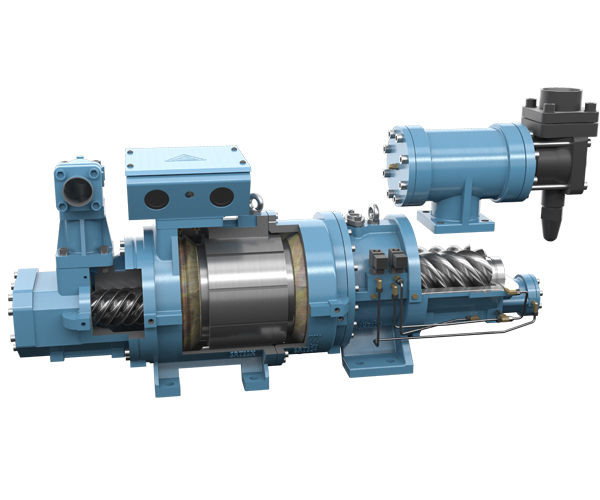
A screw compressor uses a pair of intermeshing male and female rotors to continuously complete suction, compression and discharge. Compared with reciprocating designs, it has fewer moving parts, continuous airflow and a compact structure, and has no wear parts such as inlet and discharge valves, making it especially suited to large cooling loads and long continuous running. Continuous airflow also means lower pressure pulsation, which is gentler on downstream heat exchangers and piping. Together, these characteristics make the screw compressor a mainstream choice in freezing, refrigeration and industrial process cooling systems.
SDL uses a two-stage compression structure. Two-stage means splitting the entire compression process into two steps: each stage has a smaller pressure ratio and a lower discharge temperature, and places a gentler load on the rotors. The benefits of this design are concrete — a simple principle and higher reliability; at the same time, each stage has a smaller volume, so the space the whole unit needs shrinks and the control system can be simplified, greatly reducing control costs. For a refrigeration unit that runs continuously without stopping, the simpler the structure, the fewer the potential failure points and the lower the maintenance burden.
A refrigeration machine room usually sits right next to cold storage or a production area, so noise and vibration directly affect the working environment and the service life of the piping. Through a special oil circuit design, SDL effectively reduces operating noise and keeps unit vibration low, so no vibration-damping hoses are needed at the pipe connections. This not only saves the cost of an accessory and its installation, but also reduces the risk of leaks caused by ageing and cracking hoses. At the same time, the unit's output is almost pulse-free, with a steady airflow that places less stress on downstream equipment and piping and makes daily operation and maintenance easier.
SDL includes an economiser port. Introducing an economiser into the refrigeration cycle can effectively improve system performance efficiency, producing more cooling from the same input power. In addition, SDL can be used with VSD, with a down-frequency operating range of 20–60 Hz and an up-frequency operating range of 20–80 Hz, adapting to actual load changes through speed adjustment and avoiding the waste of an oversized machine running under a light load. The combination of economiser and VSD keeps the unit at higher performance across a wider application range.
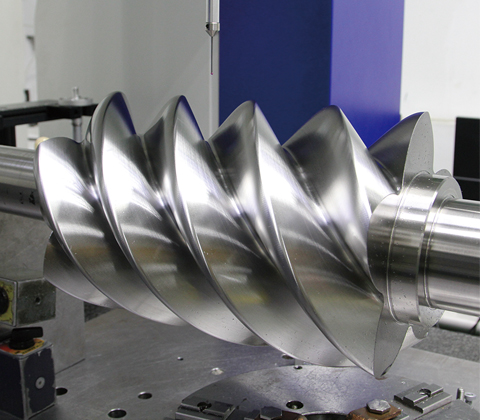
The rotor is the heart of a screw machine. SDL uses the Fusheng 5:6 asymmetric rotor profile, with rotors formed on a British HOLROYD rotor machining centre and German KAPP and KLINGELNBERG precision rotor grinders. The combination of profile design and machining precision directly determines the unit's volumetric efficiency and smoothness of operation.
| Item | Specification |
|---|---|
| Model | SDL Series screw refrigerant compressor |
| Displacement | 120 – 655 m³/hr |
| Refrigerant | R22 / R404A / R507 |
| Evaporating temperature (R22) | Down to -60°C |
| Evaporating temperature (R404A) | Down to -65°C |
| Rotor profile | Fusheng 5:6 asymmetric profile |
| VSD range (down) | 20 – 60 Hz |
| VSD range (up) | 20 – 80 Hz |
| Parallel operation | Multi-unit parallel operation supported |
Two key points stand out from this table: first, the displacement range is wide — the 120–655 m³/hr span covers the different cooling demands from small cold storage to large centralised cooling; second, low-temperature capability is strong, reaching -60°C under R22 and -65°C under R404A, enough for demanding applications such as quick-freezing and low-temperature refrigeration. Together with the multi-unit parallel design, the system can be expanded as needed rather than investing in one oversized unit up front.
The reliability of a refrigeration system is rarely built by piling on features; it accumulates slowly through sound structure and solid components. By putting two-stage compression, low noise and low vibration, an economiser port and VSD capability into one unit, the SDL Series essentially serves three points: large cooling capacity, long cycles and less to worry about. For users planning a cold storage or centralised cooling project, it offers an option worth serious evaluation.
| Fusheng 5 | 6 asymmetric rotor profile, machined on HOLROYD rotor machining centres from the UK and finished on KAPP and KLINGELNBERG precision rotor grinders from Germany, then inspected on ZEISS and LEITZ coordinate measuring machines. |
|---|


Give us your working pressure, air demand and site conditions, and we will confirm the model and configuration