
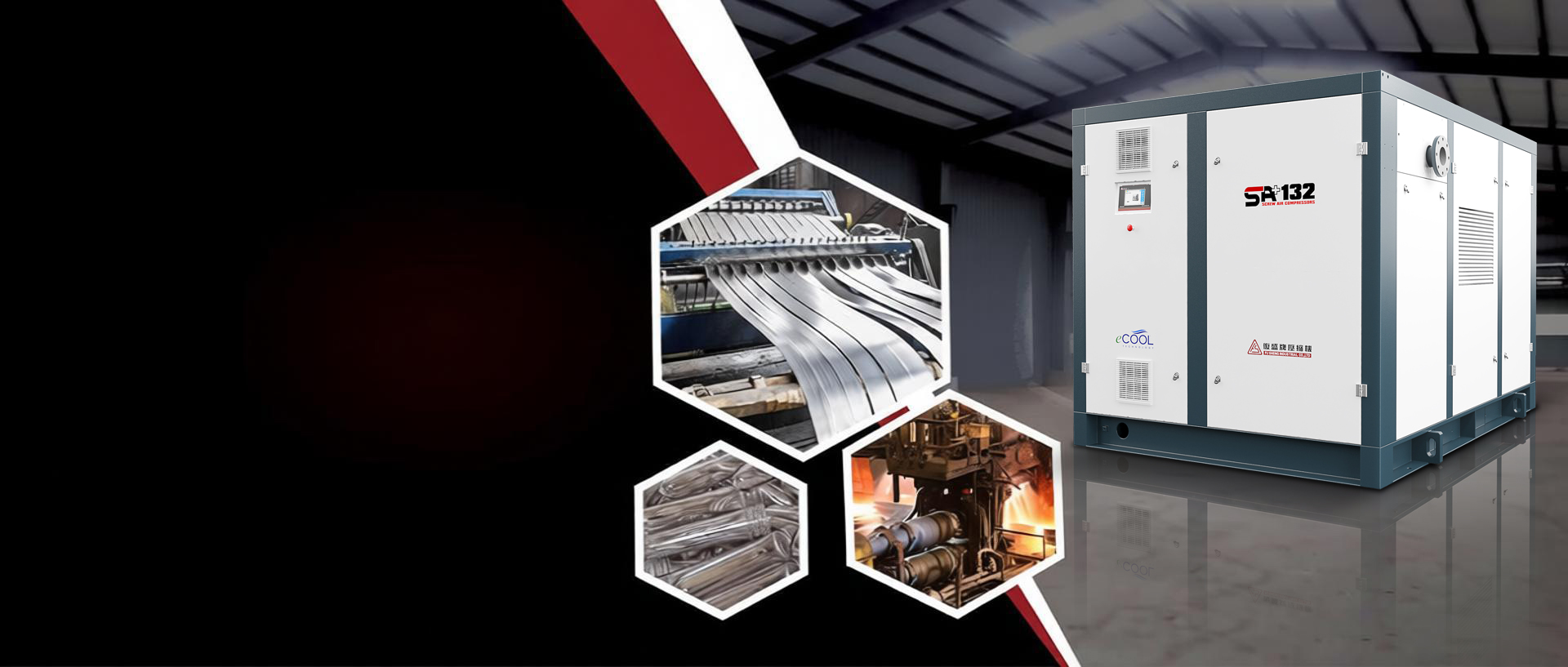
For plants with heavy air demand, the compressor room is often one of the biggest electricity users on site. In the cost structure of compressed air, the purchase price is only a small part; the real weight lies in the electricity bill over years of operation. Every gain in compressor efficiency, multiplied by round-the-clock running hours, becomes a substantial difference in cost.
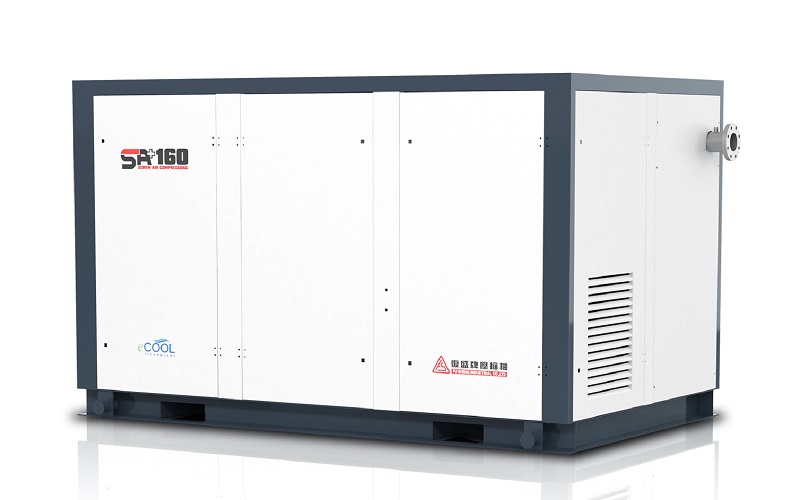
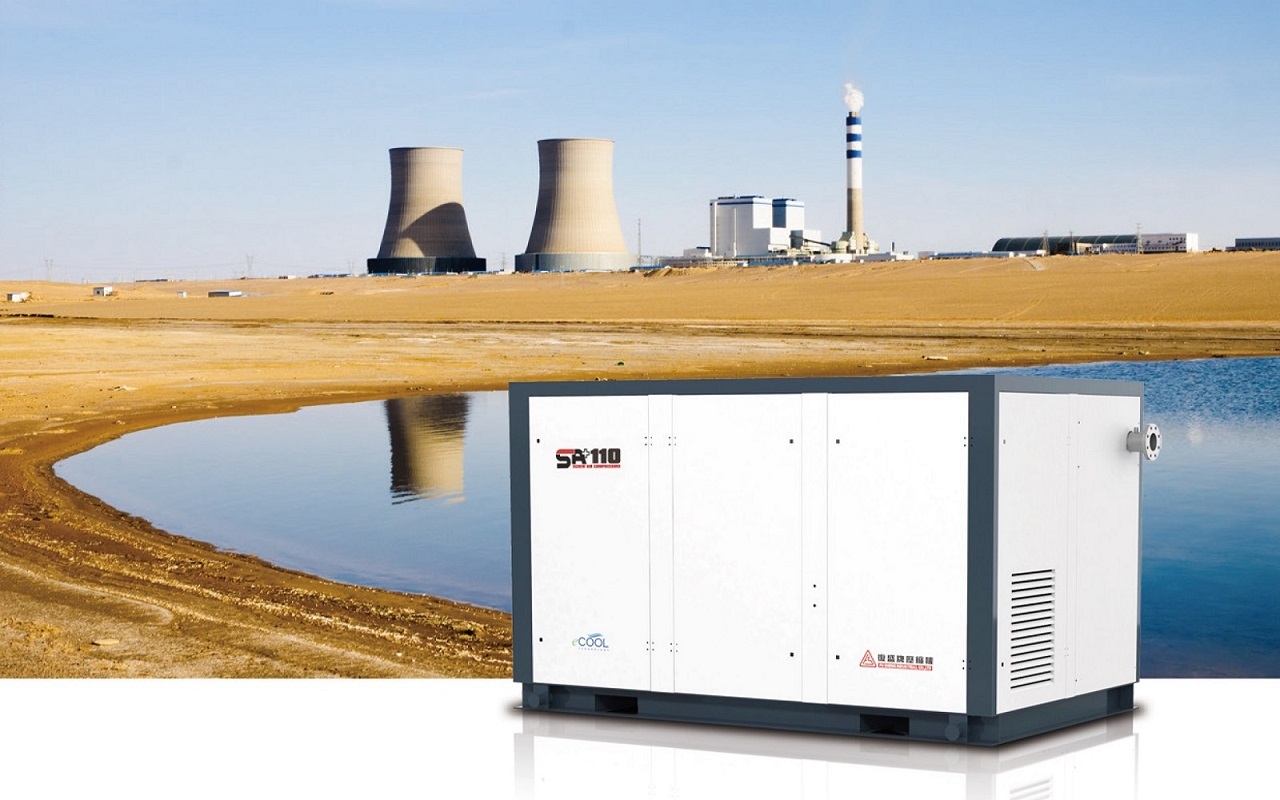
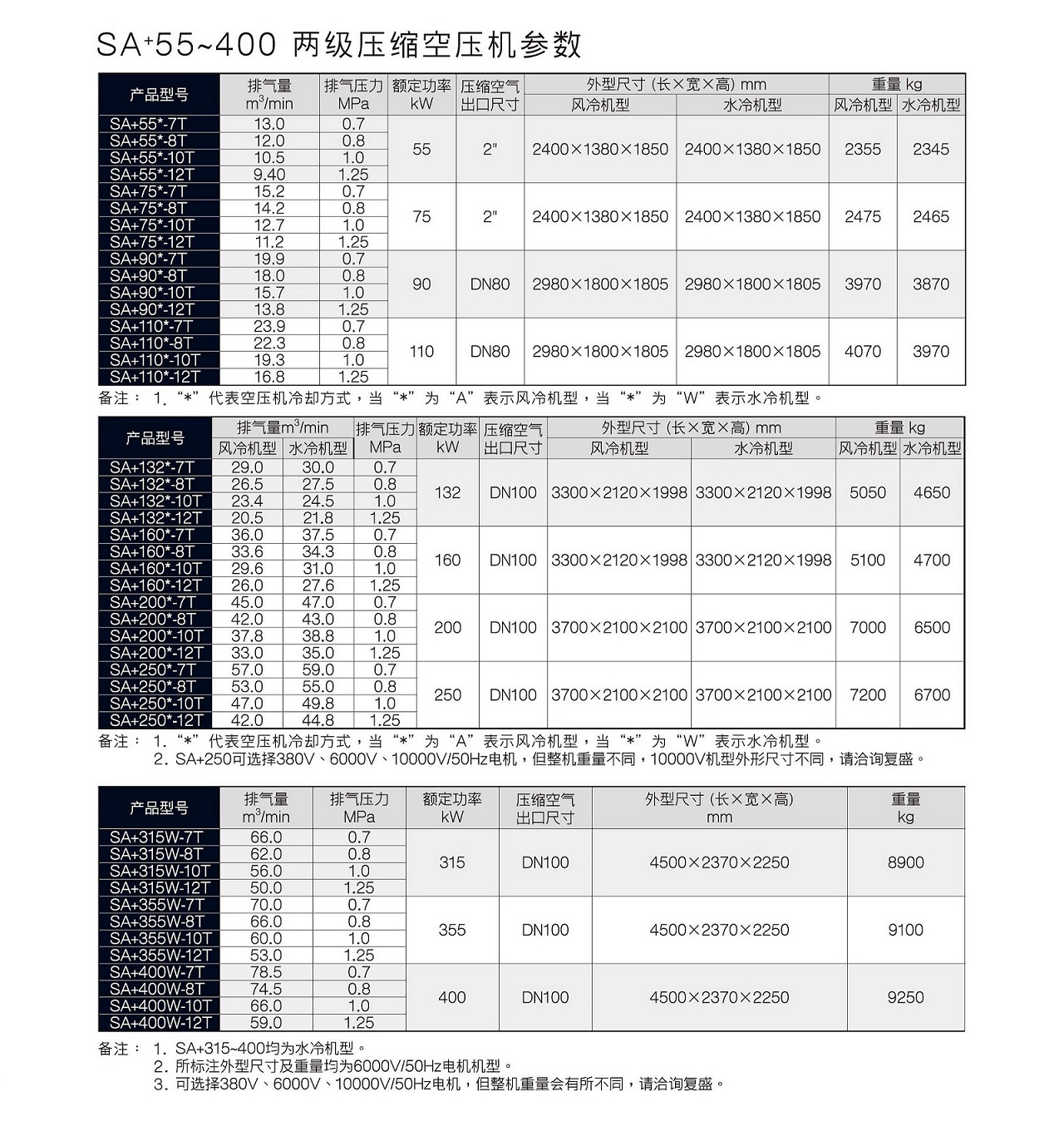
The Fusheng SA+ two-stage screw air compressor is built around exactly that. By splitting compression into two stages, it brings the process closer to isothermal compression and cuts energy consumption sharply — around 15% less than single-stage compression. The series runs at 0.7~1.25MPa working pressure, with air delivery of 4.2~85.0m³/min and power from 55~450kW.
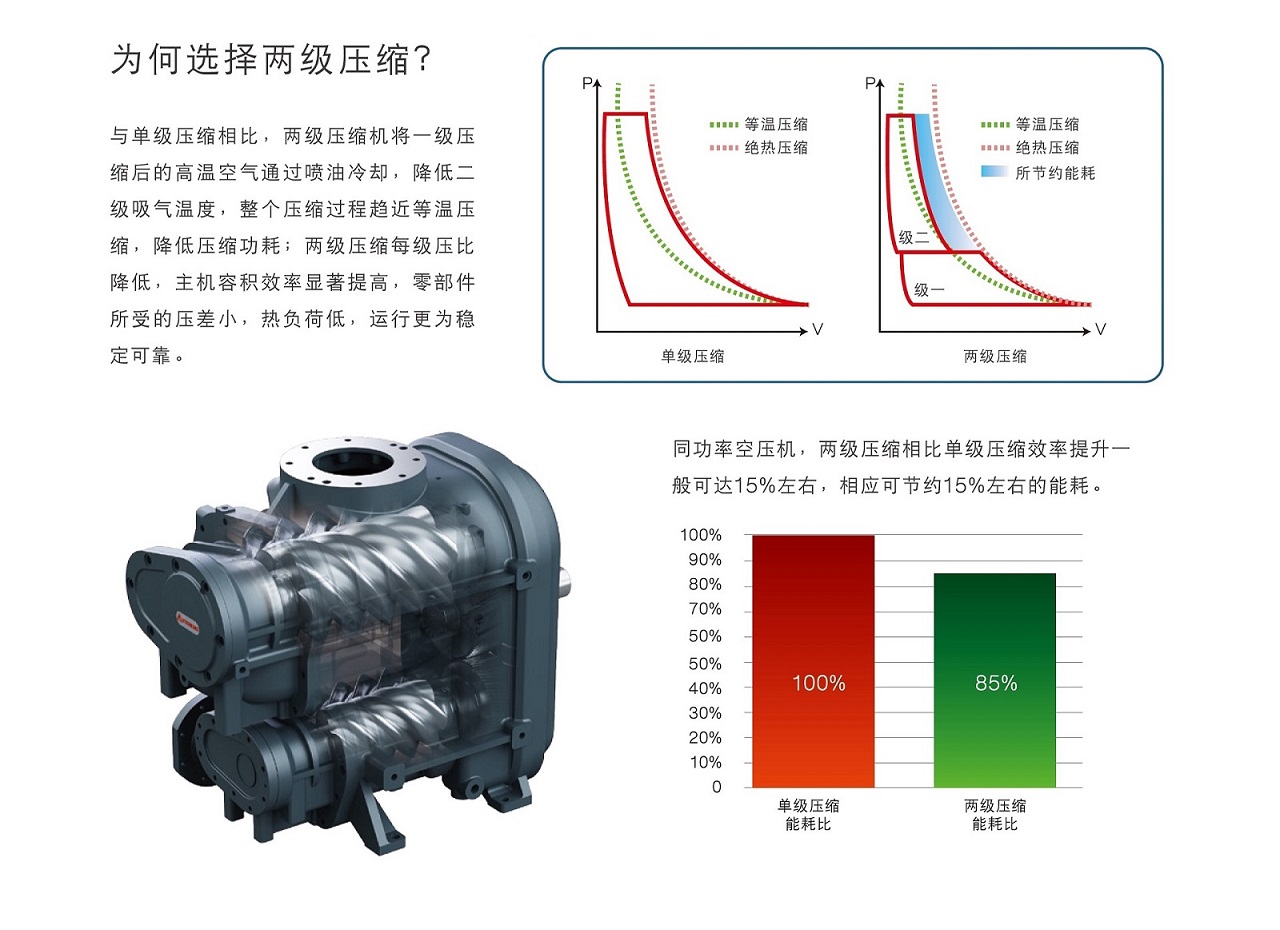
Air heats up as it is compressed, and the hotter the gas, the more work it takes to raise it to the same pressure. Ideally the compression process would be held as close to isothermal as possible — no temperature rise, minimum work.
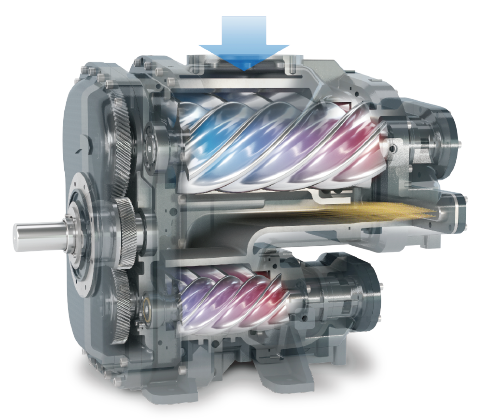
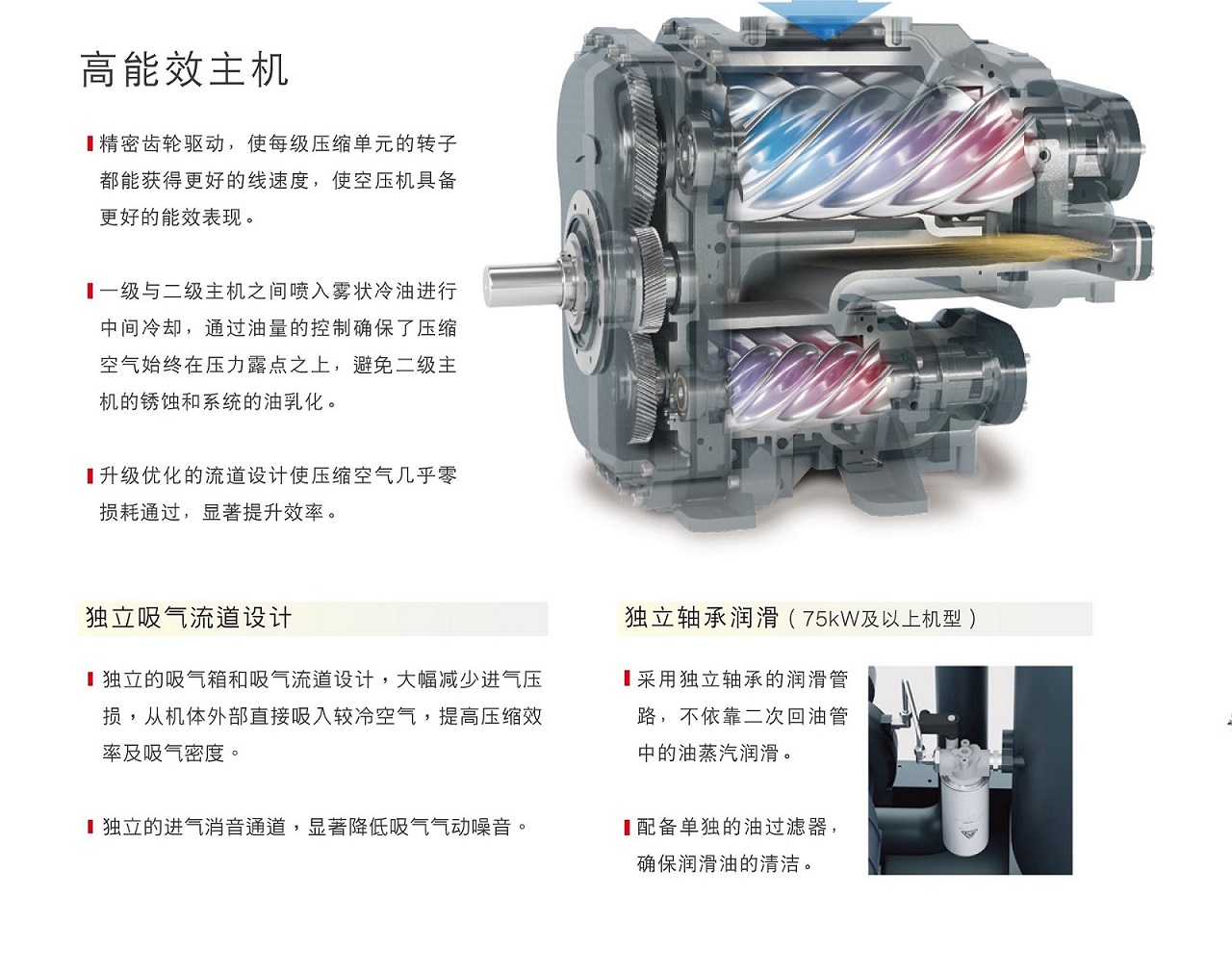
In a single stage, structural limits mean the gas heats up considerably in one pass, so the real process departs a long way from isothermal. Two-stage compression works differently: the air is compressed to an intermediate pressure, thoroughly cooled, and then passed to the second stage. Two compressions and two coolings make the temperature curve of the whole process flatter, and therefore closer to isothermal. That is the fundamental reason two-stage compression saves power.
That is also why two-stage compression is not simply a single-stage structure cut in two. It calls for interstage cooling, sensible pressure distribution and a purpose-designed airend before the theoretical advantage of isothermal operation turns into a lower reading on the meter.
According to Fusheng, the SA+ two-stage series saves around 15% compared with single-stage compression. On a single machine that figure may look modest, but for 55~450kW units running continuously all year in a compressor room, a 15% difference in electricity cost accumulates throughout the operating cycle and ends up as a considerable saving.
The actual saving will vary with duty, air demand fluctuations, piping condition and other factors, so selection is best supported by calculations based on real operating data rather than a single percentage applied blindly. Put another way, the energy saving is proportional to running hours: the longer the machine runs and the fuller its load, the shorter the payback on two-stage compression.
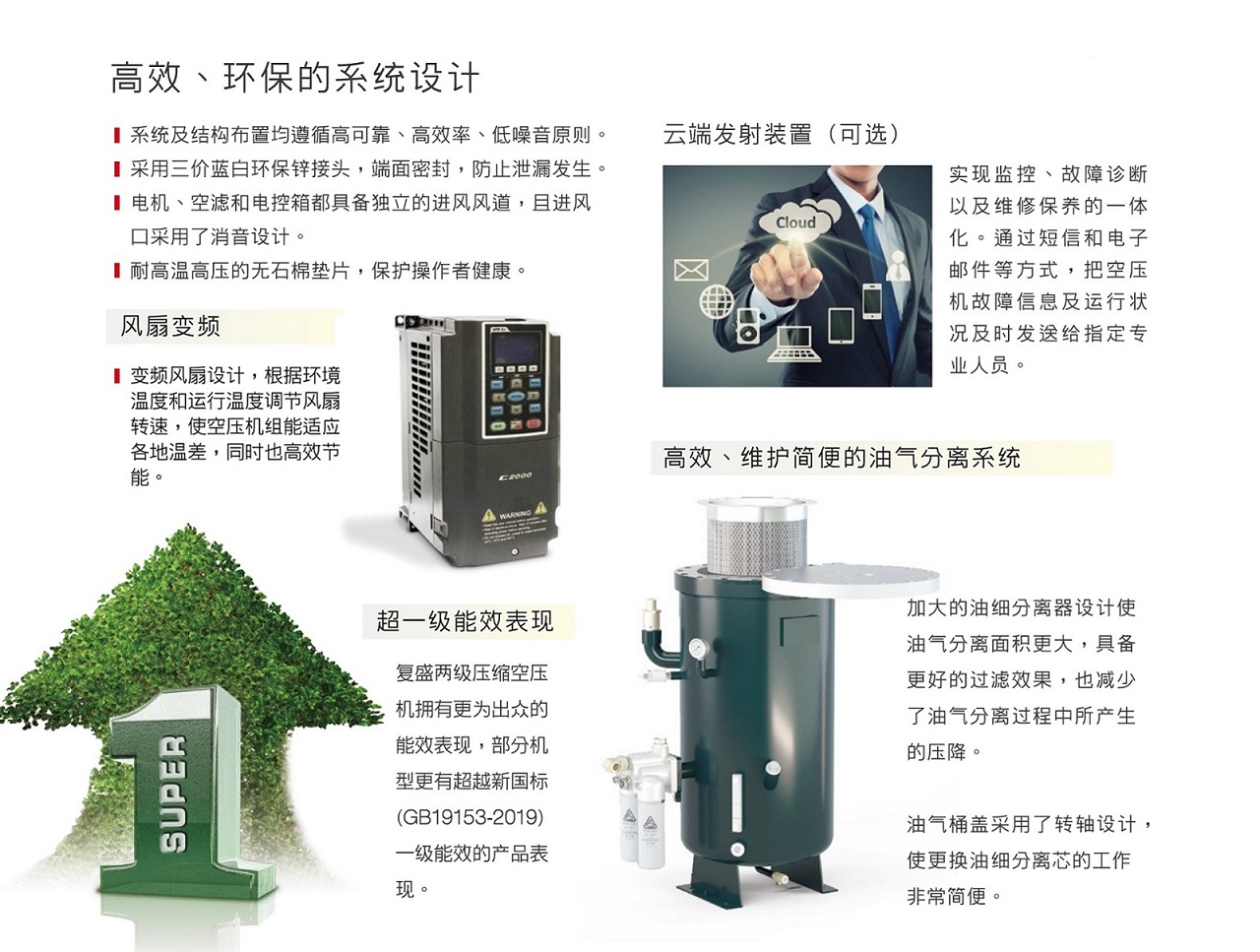
The larger the machine, the greater the impact a stoppage has on production. The SA+ series uses Fusheng high-efficiency airends, balancing the pursuit of efficiency with stable, reliable operation. For a compressor room, a steady continuous air supply is itself part of efficiency — the production losses caused by frequent stoppages are usually dearer than the extra electricity. Two-stage compression also demands more of airend design and manufacturing, and the actual quality of the airend determines whether the energy saving can be sustained over the long term.
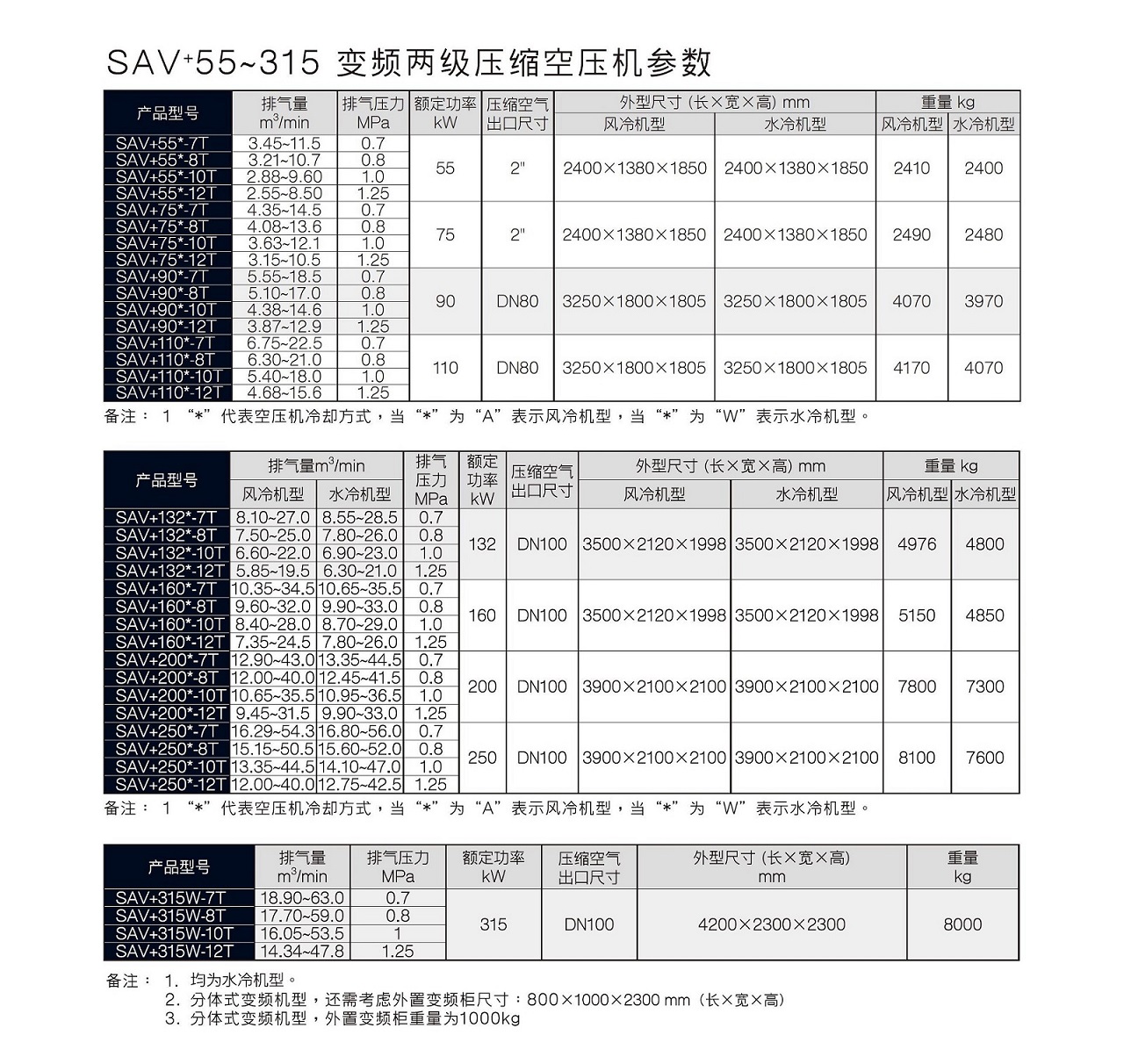
The ranges 0.7~1.25MPa and 4.2~85.0m³/min cover a lot of ground, but the maximum of each cannot be taken at the same time: for a given model, available air delivery falls as pressure rises. Selection should start by fixing the working pressure used most often, then matching air delivery at that pressure point, and setting model size and quantity from there.
The efficiency of a single compressor is only part of a compressor room's energy performance. In practice, pressure set too high, piping leaks, insufficient storage volume and excessive pressure loss in the treatment stages all erode the savings an efficient model can deliver.
So when choosing an SA+ two-stage model, several things are worth doing at the same time: check the piping network for obvious leaks, confirm that storage volume matches the fluctuation in air demand, and check whether pressure loss through drying and filtration is reasonable. Optimising these together is what lets the efficiency advantage of two-stage compression actually reach the meter.
| Item | Specification |
|---|---|
| Working pressure | 0.7 ~ 1.25 MPa |
| Air delivery | 4.2 ~ 85.0 m³/min |
| Power range | 55 ~ 450 kW |
| Compression | Two-stage twin-screw |
| Product type | Screw air compressor (oil-injected) |
| Efficiency feature | Compression process close to isothermal |
Energy savings in a compressor ultimately have to come from the compression process itself. The SA+ series uses two-stage compression to push that process closer to isothermal, serves medium and large compressor rooms with a 55~450kW power span, and treats stability as a non-negotiable precondition for large machines. For users running high power over long hours, efficiency and reliability were never an either-or choice.
This product is configured to order for the actual working conditions. For detailed specifications, please call our service hotline on 400-820-8795 or contact us for selection data.
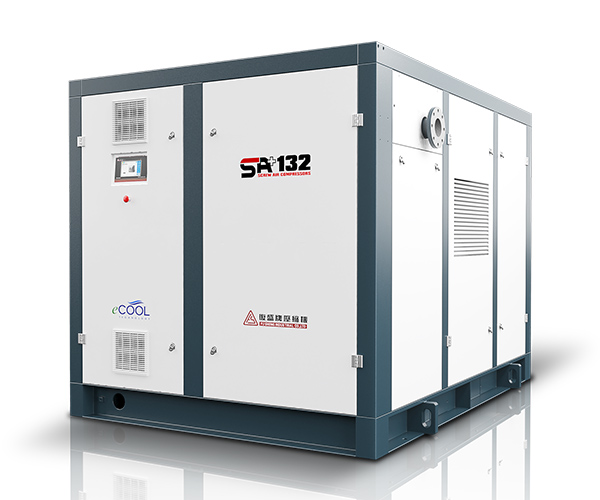
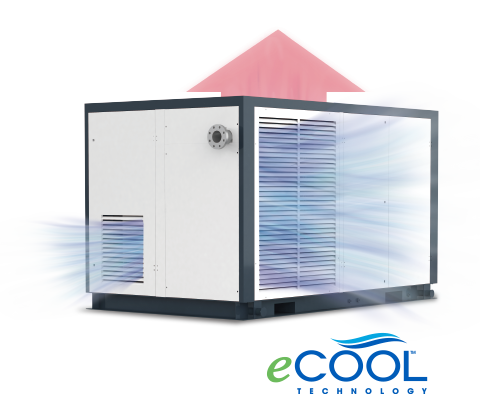
Give us your working pressure, air demand and site conditions, and we will confirm the model and configuration