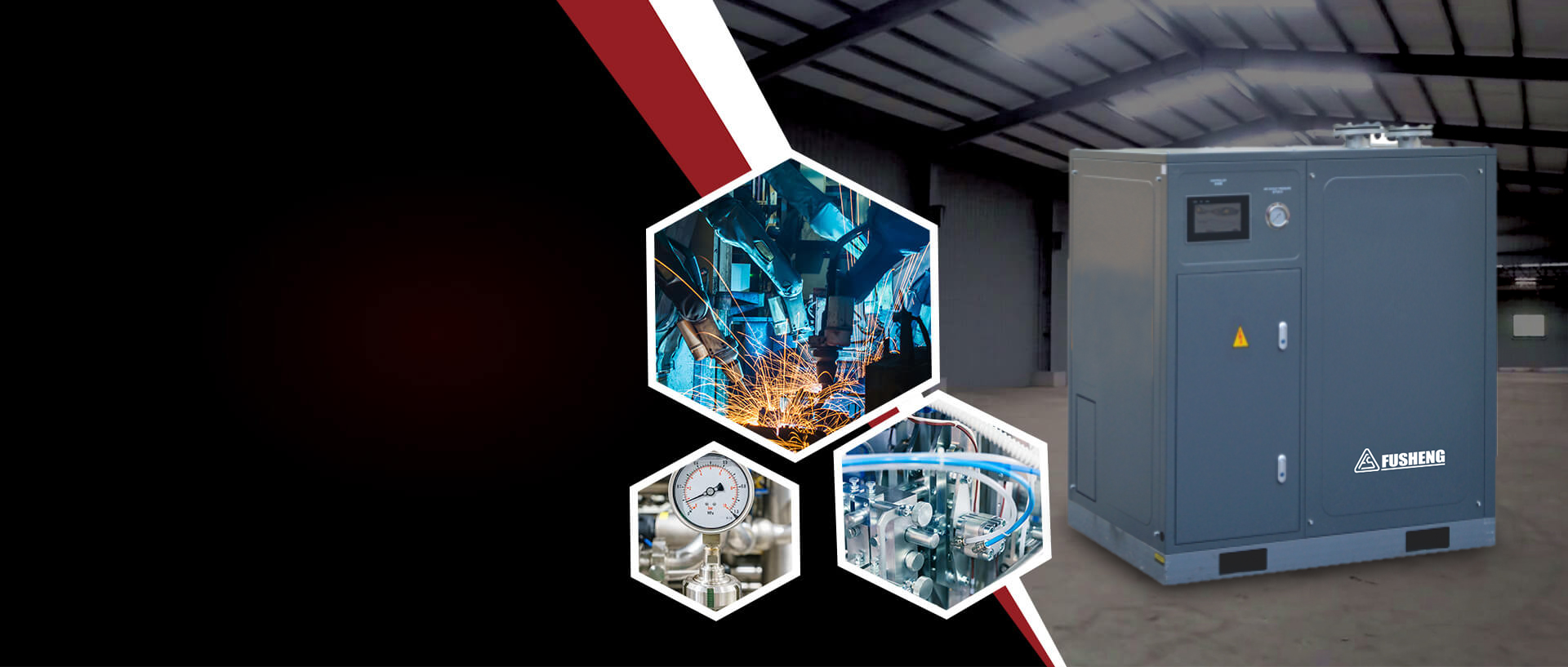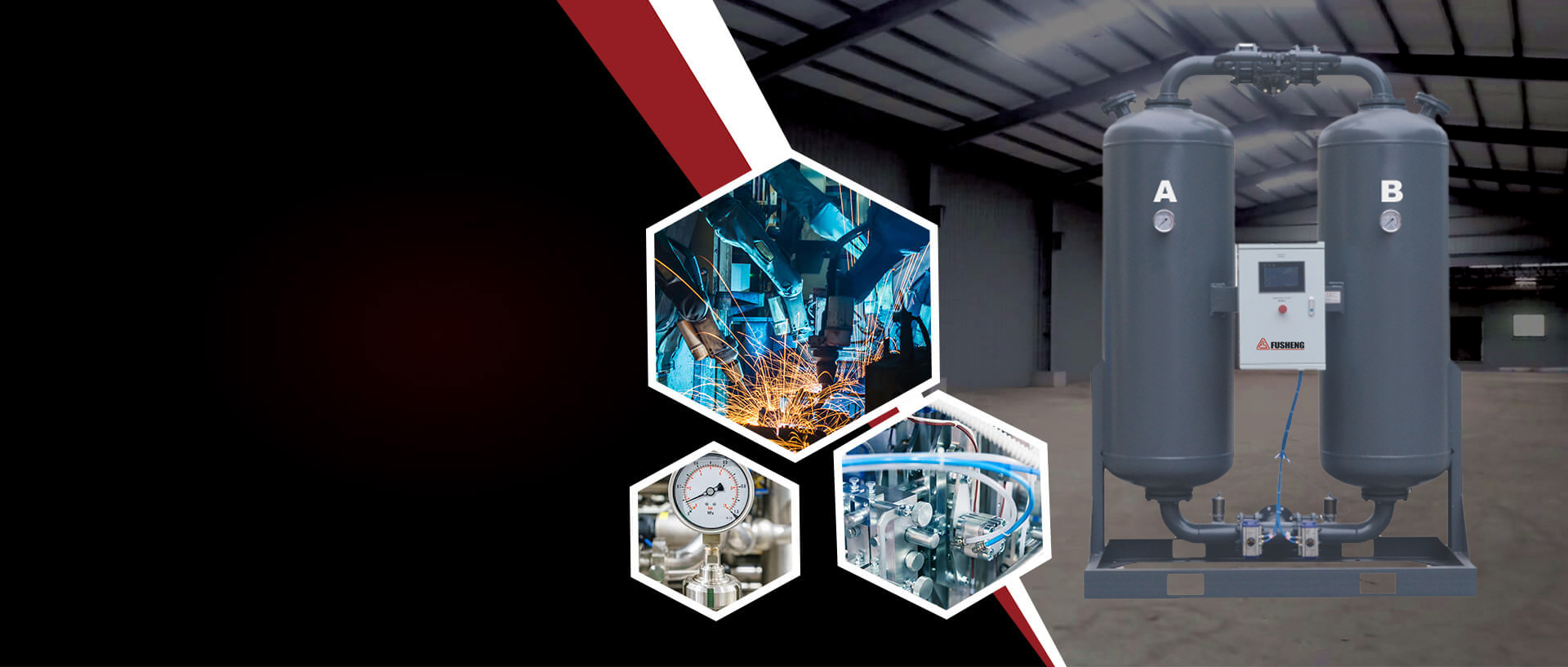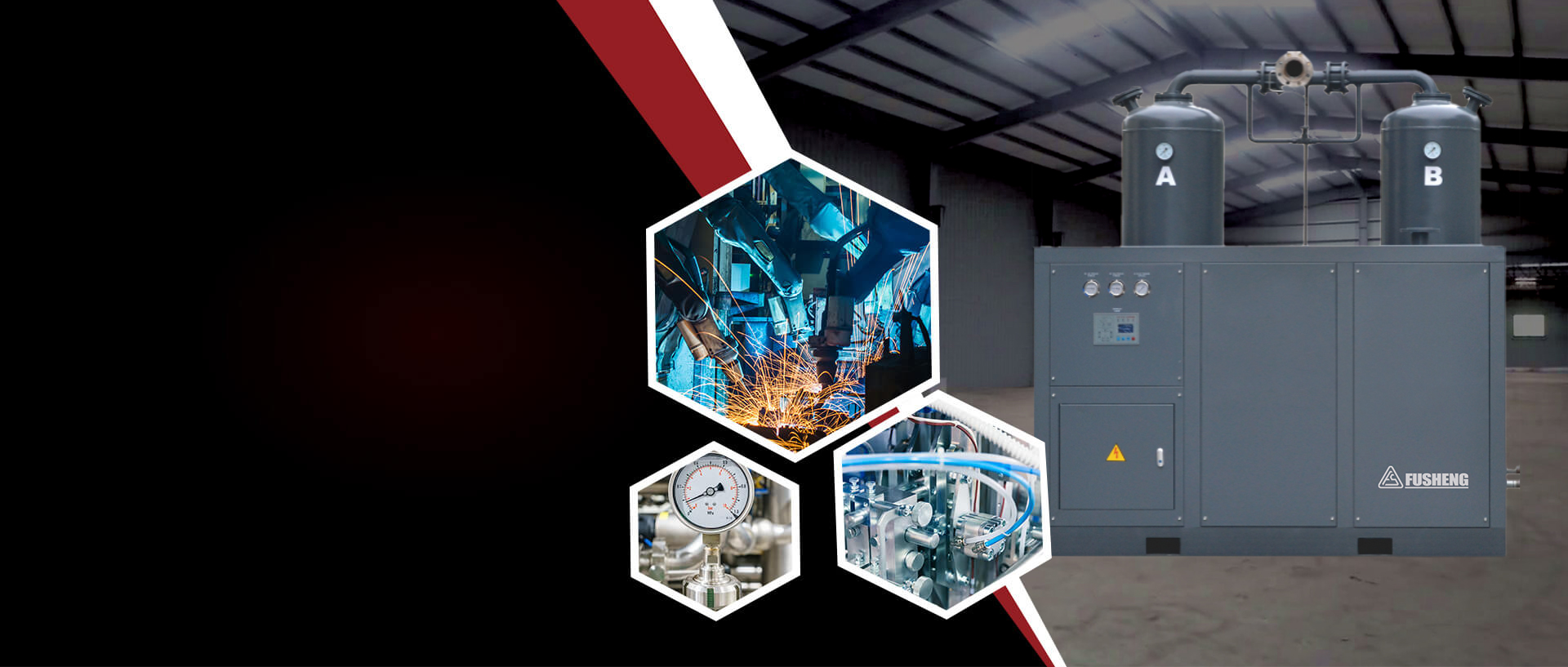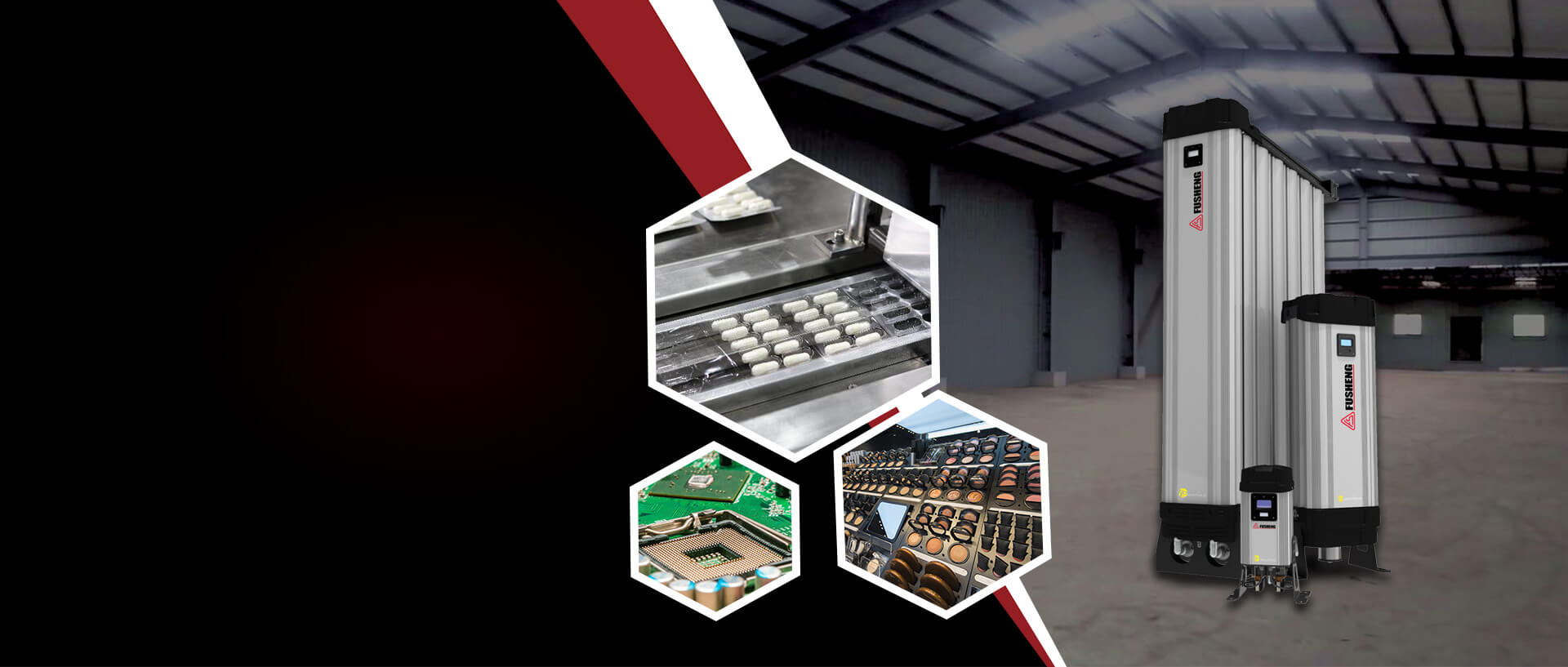
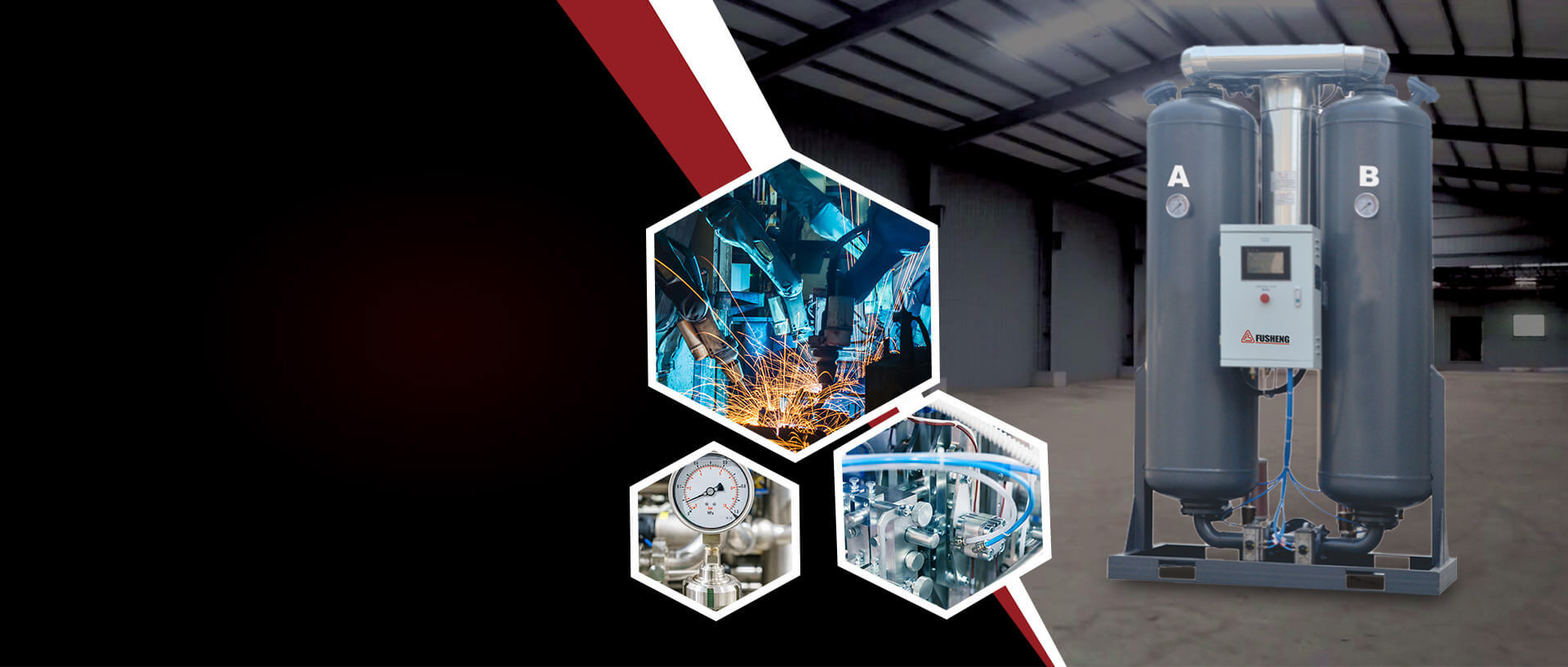
When choosing a desiccant dryer, users often face a dilemma: heatless regeneration is simple and needs no heating, but it consumes part of the finished compressed air during regeneration; the larger the air demand and the lower the required dew point, the more significant that loss becomes. For sites that are sensitive to air supply cost yet genuinely need a low dew point, finding the balance between dew point and air consumption becomes the core selection question.
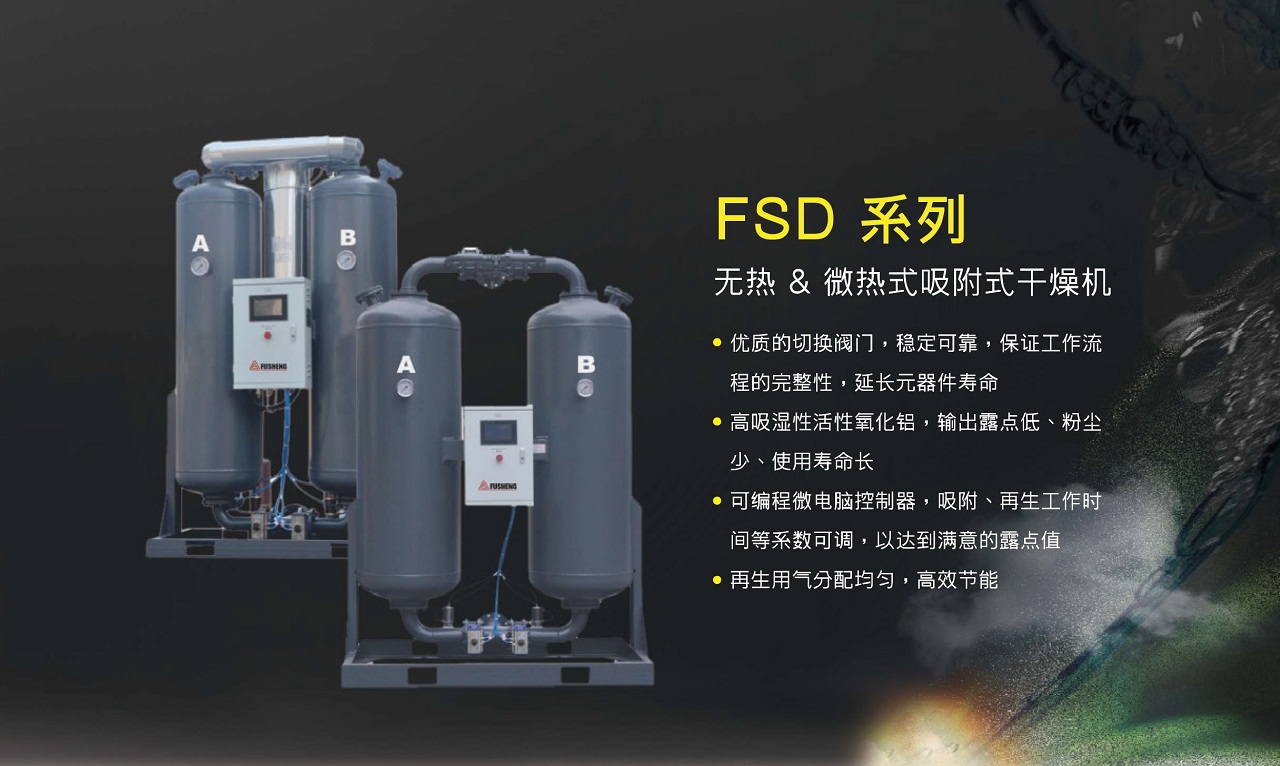
The Fusheng FSD heated-regeneration dryer, covering 1.2-90 m³/min, is a compromise in this context: it introduces a small amount of heating into the regeneration stage to reduce the finished air consumed, thereby cutting running cost while maintaining a low dew point.
Heatless regeneration works by taking part of the dried compressed air, reducing its pressure and back-blowing it through the saturated desiccant tower to carry the moisture out and discharge it. Regeneration depends entirely on this finished air, so air consumption is high. Heated regeneration adds a step: the gas used for regeneration is heated, and since warmer gas carries more moisture, less of it is needed to complete regeneration. Simply put, heated regeneration trades a little electricity for some air back. To judge whether the trade is worthwhile, the most direct method is to convert the saved regeneration air into the compressor's electricity cost and compare it with the extra power used for heating; the larger the air demand and the longer the running hours, the clearer the calculation usually becomes.
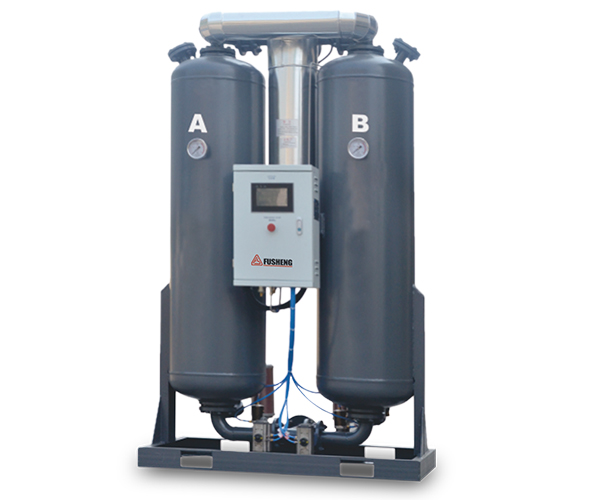
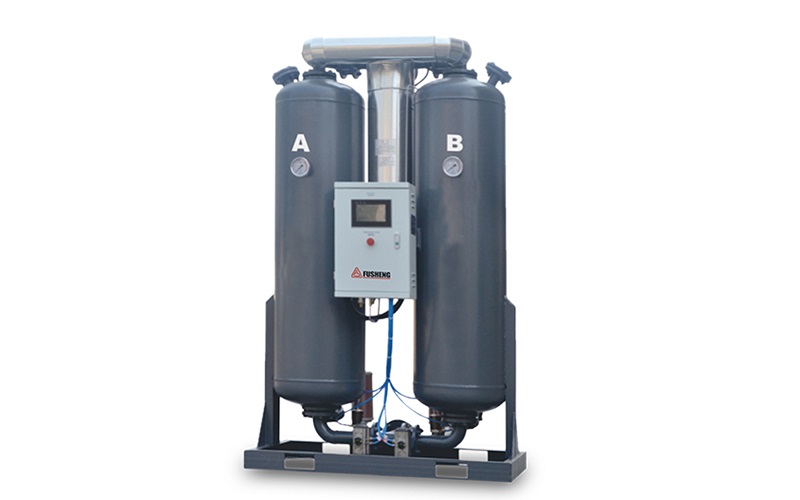
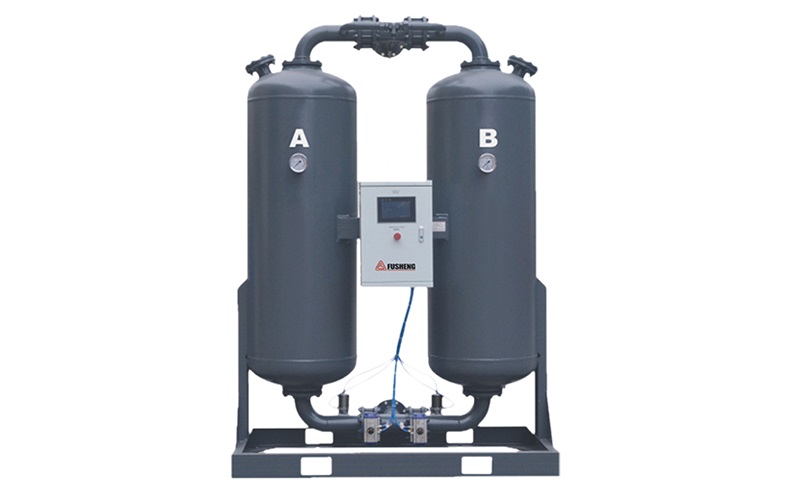
Heated regeneration also uses a twin-tower structure, with one tower adsorbing and the other regenerating, alternating to keep the supply continuous. The difference is that during regeneration a heater raises the temperature of the regeneration gas so moisture desorbs from the desiccant more easily. Because heating improves regeneration efficiency, the amount of regeneration gas required falls, reducing the draw on the compressor's output. Another benefit is that the desiccant is regenerated more thoroughly, which helps maintain stable adsorption performance and a longer service life.
Heated regeneration is not better than heatless regeneration in every case. Its advantage shows most clearly in high-demand, long-running operations, where the absolute amount of regeneration air saved is substantial and the accumulated benefit covers the power used for heating. In low-demand, intermittent operations, by contrast, the heatless approach's no-heating, simple-structure advantage is more apparent. The key to selection is therefore not which method is more advanced but which end of the range your air demand and running pattern is closer to.
Another often-overlooked detail is the pressure fluctuation caused by twin-tower switching. As adsorption and regeneration alternate, outlet pressure and flow change briefly; pressure-sensitive processes should assess how much of this fluctuation is acceptable and, where necessary, add buffering to the system. Thinking through these operating details in advance lets the equipment settle into the existing air system smoothly once it is commissioned rather than creating new problems. For a continuous-production plant, this stable-from-day-one behaviour is often worth more than any single figure on paper.
| Item | Specification |
|---|---|
| Model | FSD Series heated-regeneration dryer |
| Capacity | 1.2 - 90 m³/min |
| Regeneration | Heated regeneration (heat-assisted) |
| Representative models | FSD-10H to FSD-75H |
| Inlet/outlet size | G1 - G2 |
| Power supply | 220V / single phase (by model) |
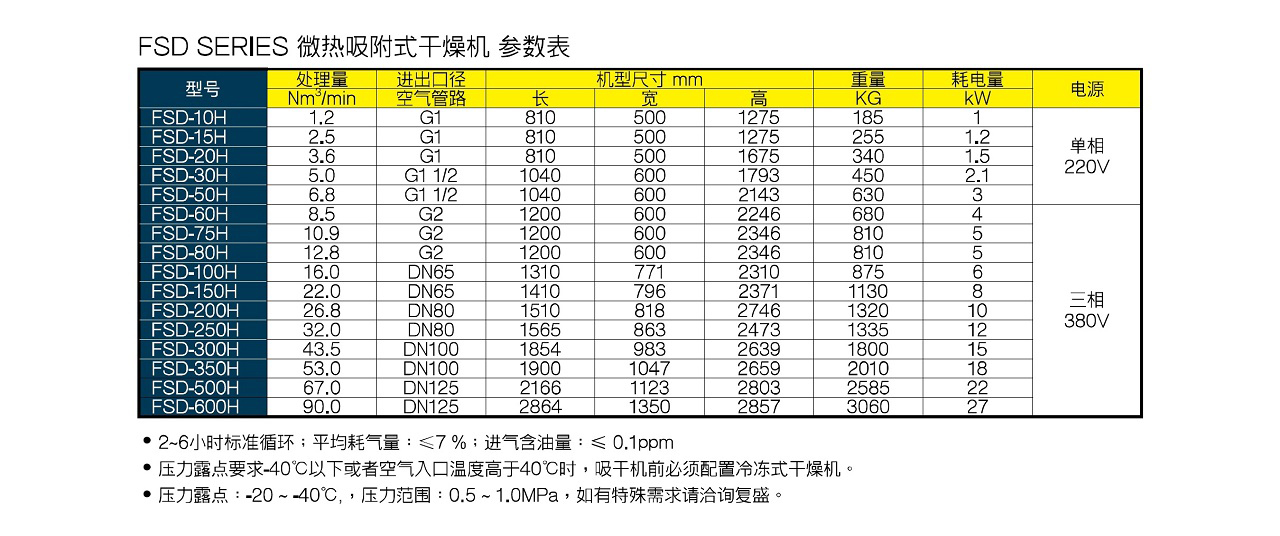
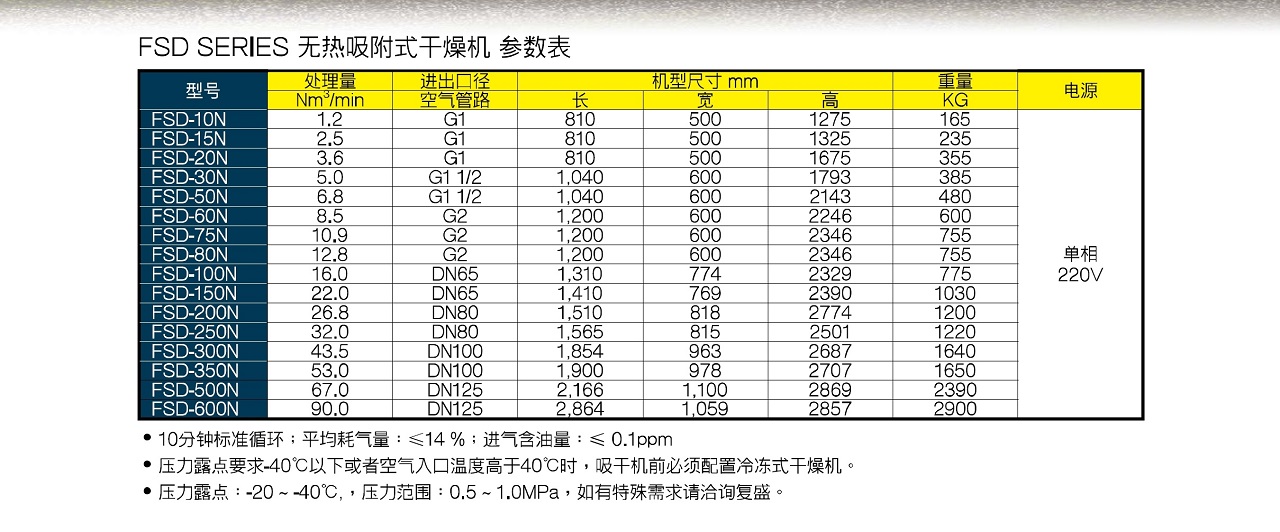
The parameters show that the FSD heated-regeneration series is distinguished by the suffix H, with capacity from 1.2 m³/min all the way to 90 m³/min and inlet/outlet sizes growing to G2, covering scales from single-point use to medium and large central supply. The wide span of models within the series makes it easy to choose the nearest match to actual air demand.
Between heatless and heated regeneration there is no absolute winner, only a question of fit. The point of heated regeneration is that it offers a middle option for users who want both a low dew point and lower air consumption. Covering 1.2-90 m³/min, the FSD heated-regeneration dryer lets users find a reasonably suitable balance point within one series, according to their own air demand.
| Model | Capacity | Nm"/min | Air Piping | Inlet/Outlet Size | Dimensions mm | Weight | KG | Power Consumption | Power Supply | ||||||||||||||||
|---|---|---|---|---|---|---|---|---|---|---|---|---|---|---|---|---|---|---|---|---|---|---|---|---|---|
| FSD-10H | 1.2 | G1 | 810 | 500 | 1275 | 185 | |||||||||||||||||||
| FSD-15H | FSD-20H | FSD-30H | 2.5 | 3.6 | 5.0 | G1 | G1 | G1 1/2 | 1040 | 810 | 810 | 500 | 500 | 600 | 1275 | 1675 | 1793 | 255 | 340 | 450 | 2.1 | 1.2 | 1.5 | Single Phase | 220V |
| FSD-50H | 6.8 | G1 1/2 | 1040 | 600 | 2143 | 630 | |||||||||||||||||||
| FSD-60H | 8.5 | G2 | 1200 | 600 | 2246 | 680 | |||||||||||||||||||
| FSD-75H | 10.9 | G2 | 1200 | 600 | 2346 | 810 | |||||||||||||||||||
| FSD-80H | 12.8 | G2 | 1200 | 600 | 2346 | 810 | |||||||||||||||||||
| FSD-100H | 16.0 | DN65 | 1310 | 771 | 2310 | 875 | |||||||||||||||||||
| FSD-150H | FSD-20OOH | FSD-250H | 22.0 | 32.0 | 26.8 | DN80 | DN65 | DN80 | 1410 | 1510 | 1565 | 863 | 818 | 796 | 2371 | 2746 | 2473 | 1130 | 1320 | 1335 | 10 | 12 | Three Phase | 380V | |
| FSD-3OOH | 43.5 | DN100 | 1854 | 983 | 2639 | 1800 | 15 | ||||||||||||||||||
| FSD-350H | 53.0 | DN100 | 1900 | 1047 | 2659 | 2010 | 18 | ||||||||||||||||||
| FSD-500H | 67.0 | DN125 | 2166 | 1123 | 2803 | 2585 | 22 | ||||||||||||||||||
| FSD-600H | 90.0 | DN125 | 2864 | 1350 | 2857 | 3060 | 27 | ||||||||||||||||||
| ·2~6-hour standard cycle; average air consumption ≤7%; inlet oil content ≤0.1 ppm | |||||||||||||||||||||||||
| ·Where a pressure dew point below -40 °C is required, or the air inlet temperature exceeds 40 °C, a refrigerated dryer must be installed upstream of the desiccant dryer. | |||||||||||||||||||||||||
| ·Pressure dew point: -20~-40 °C; pressure range 0.5~1.0 MPa. Please contact Fusheng for special requirements. |
Official specification charts for this product — click to enlarge
Give us your working pressure, air demand and site conditions, and we will confirm the model and configuration