In many medium-to-large plants, the problem in the compressor room is not "not enough air" but "still making air that goes unused." The shop floor runs flat out by day and only a few lines by night, yet a fixed-speed machine keeps running at the same pace; or, to be "safe," the working pressure is set at 1.0MPa or even 1.25MPa when the site really needs only 0.7MPa—every extra pressure step keeps turning into electricity cost.
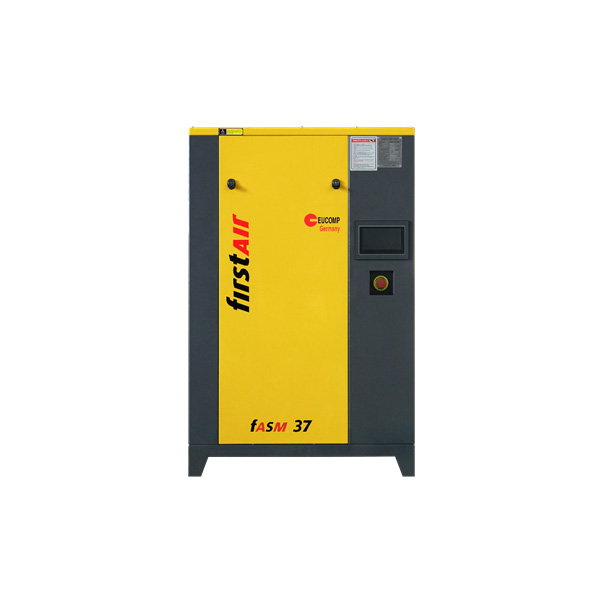
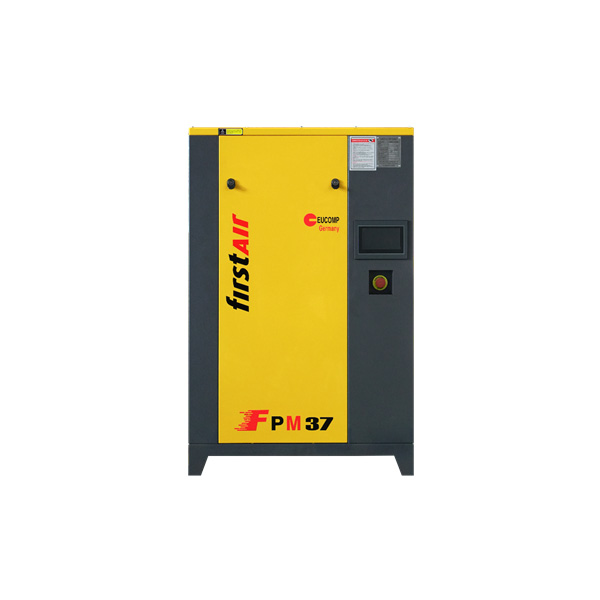
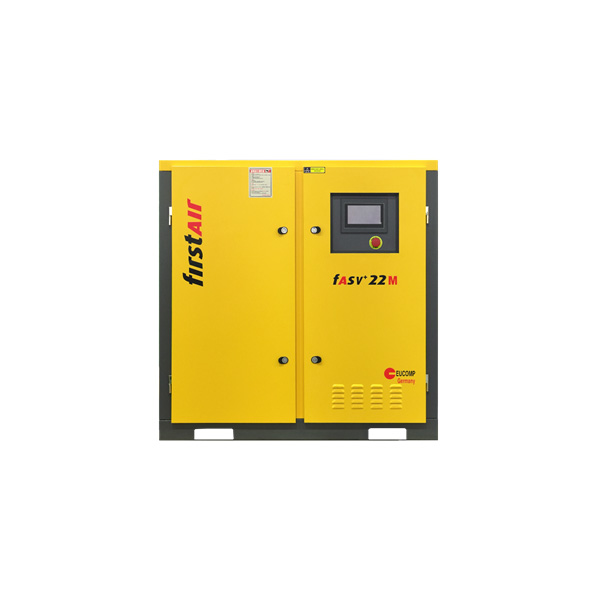
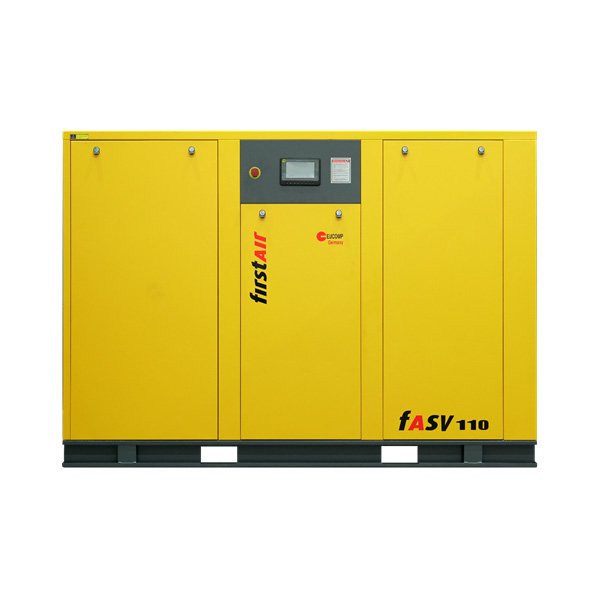
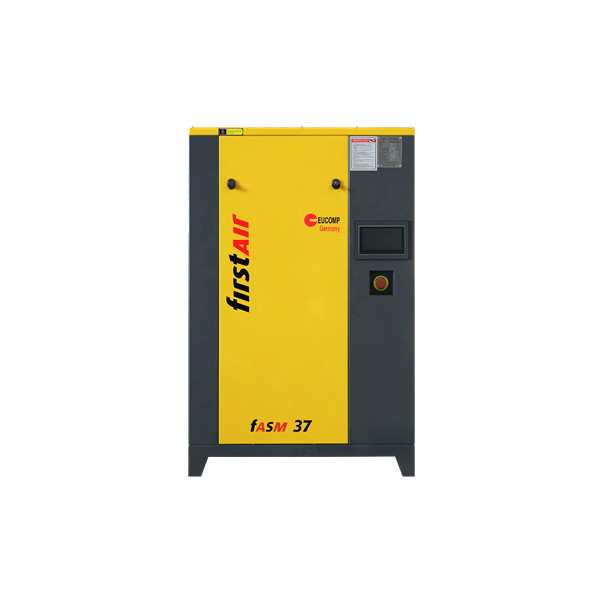
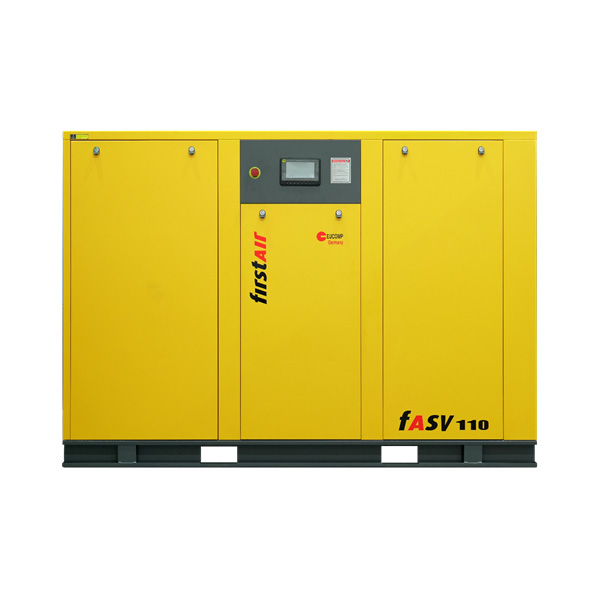
The ESSENCE FASV-M PM VSD screw air compressor is built for exactly these medium-to-large air demands. It covers six power points from FASV45A-*M to FASV132A-*M, with power of 45-132kW, working pressure of 0.7-1.25MPa and air delivery up to 25.20m³/min within the series. It uses PM VSD starting and coupling drive, and its air outlet is mainly G2 with square flange DN80.
On the same screw compressor, pressure and air delivery trade off against each other. Take the 45kW model of FASV-M: at 0.7MPa the air delivery is 3.12-7.80m³/min, dropping to 3.04-7.60m³/min at 0.8MPa, 2.76-6.90m³/min at 1.0MPa, and only 2.52-6.30m³/min at 1.25MPa. Each step up in pressure drops the available air delivery a notch lower.
These figures make one thing clear: higher pressure is not "safer," it is simply more expensive. The right order is to first confirm the pressure requirement of the most demanding equipment on the air side, lock in the pressure level, and then match the air delivery at that pressure—rather than picking a big machine first and then running it inefficiently at high pressure for the long term.
The drive of FASV-M is a coupling drive. Above 45kW, the efficiency of power transfer between the motor and the airend directly affects the unit's losses. A coupling drive is rigid in structure and direct in transfer, suits long continuous running of medium-to-large units, and reduces the belt-tensioning and replacement maintenance that belt drives need.
For a plant that treats its compressor as infrastructure, whether the drive is stable often matters more to daily use than any single peak specification—after all, the production loss from one shutdown is usually far higher than the routine maintenance cost of a machine.
One easily overlooked figure in the data sheet is aftercooler outlet temperature ≤ ambient + 15°C.
The lower the discharge temperature, the cooler the air entering the receiver tank, refrigerated dryer and filters, the lighter the load on the treatment equipment, and the lower the energy consumption and failure rate across the whole air system. For users with a refrigerated dryer, this figure directly sets the dryer's sizing margin and operating load. Factoring it in at selection time is more economical than adding treatment equipment later.
FASV-M's voltage/frequency is rated at 220/380/415/440V, 50/60Hz, covering several common power systems. For companies with multiple plants or equipment deployed under different grid environments, one electrical platform adapting to a wider range of supply conditions makes selection and spare-part management simpler.
The air outlet is mainly G2 with square flange DN80, with some models fitted with flange DN100. Outlet size and air delivery go together: an undersized outlet adds pressure loss and leaves the unit "making air it cannot deliver." Piping design should therefore proceed alongside unit selection, not be adjusted on the fly once the equipment arrives.
| Item | Specification |
|---|---|
| Working pressure | 0.7 ~ 1.25 MPa |
| Air delivery | 2.52 ~ 55.00 m³/min |
| Power range | 45 ~ 300 kW |
| Model power points | 45 / 55 / 75 / 90 / 110 / 132 kW |
| Starting method | PM VSD starting |
| Voltage/frequency | 220/380/415/440V, 50/60Hz |
| Drive | Coupling drive |
| Aftercooler outlet temperature | ≤ ambient + 15°C |
| Air outlet | G2 / square flange DN80 |
Note that the model power points and the series power range do not fully coincide: the data sheet lists six power points from 45-132kW, while the series as a whole is rated at 45-300kW with air delivery of 2.52-55.00m³/min. In practice, selection should be based on the air delivery of the specific model at its pressure step.
The value of FASV-M is not in some exaggerated figure but in laying out the relationship among pressure, air delivery and power so that selection is grounded in facts. For a medium-to-large plant, choosing the right pressure level and matching the air delivery accurately usually cuts cost more than spending extra on a bigger machine.
| Starting Method | Type: PM VSD start |
|---|---|
| Voltage / Frequency | V/Hz 220/380/415/440V、50/60Hz |
| Aftercooler Outlet Temperature | °C ≤ ambient temperature +15 °C |
| Drive Method | Coupling drive |
| Air Outlet | in. Flange DN80, JB/T81-1994; Flange DN100, JB/T81-1994 |
| Working Pressure | 0.7~1.25 MPa; air delivery 2.52~55.00 m³/min; power range 45~300 kW |
| Working Pressure | 0.7~1.25 MPa |
| Air Delivery | 2.52~55.00 m³/min |
| Power Range | 45~300 kW |




Give us your working pressure, air demand and site conditions, and we will confirm the model and configuration