When buying an air compressor, many people are drawn first to words like "VSD," "permanent magnet," and "two-stage compression," overlooking a more basic question: how complex does this air system really need to be? For a good number of plants, air demand is steady and the operating conditions are simple. What they actually need is a base model that is simple in structure, rugged, and easy to maintain — the more features a machine has, the more potential points of failure it carries. So the first step in selection is often not comparing specifications, but deciding which category of operating conditions you fall into.
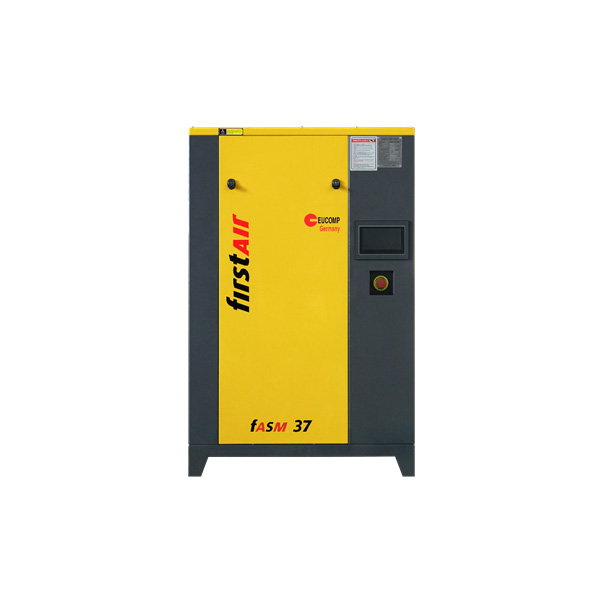
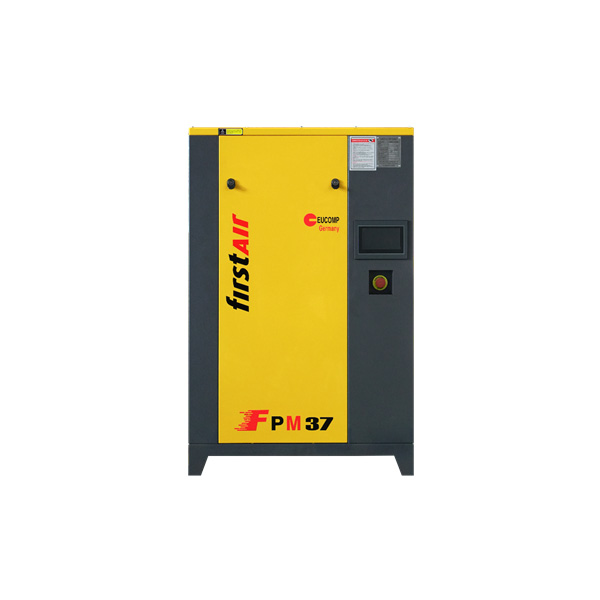
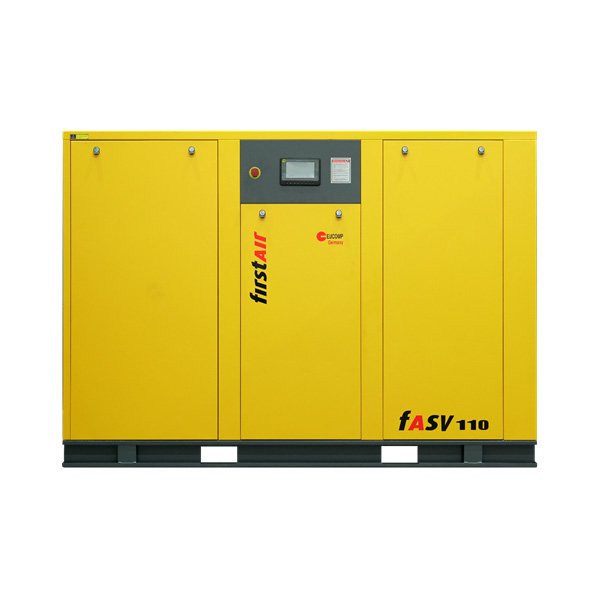
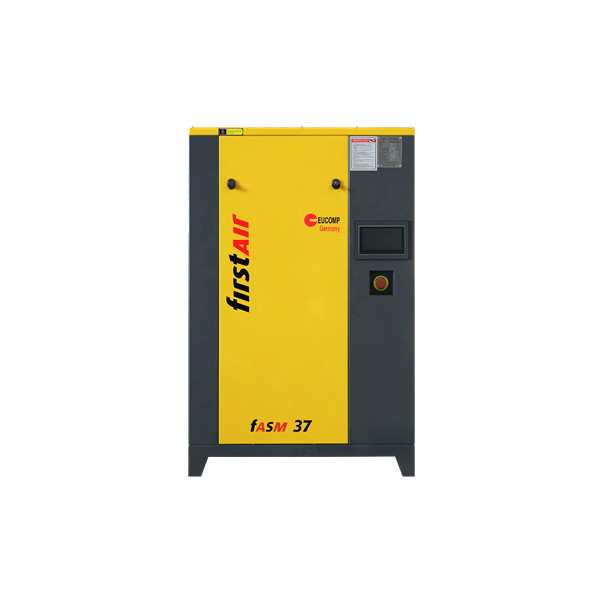
The ESSENCE FAS screw air compressor is positioned exactly at this tier. It covers seven power points, from FASM08A-* to FASM37A-*, with power from 7.5 to 37 kW, working pressure of 0.7-1.25 MPa, and air delivery of 0.33-6.70 m³/min. It uses coaxial direct drive and PM VSD start, with voltage/frequency of 220/380/415/440V, 50/60Hz.
The FAS drive is coaxial direct drive. The motor and the airend are connected on the same shaft; power is not relayed through belts or extra gearing, so the structure is more compact and there are fewer transmission links.
The benefits come in three layers: in efficiency, fewer intermediate links mean less that can be lost; in maintenance, periodic tasks such as belt aging, tensioning, and replacement are eliminated; in reliability, the simpler the structure, the lower the probability of problems over long-term operation. For small and mid-sized plants with limited maintenance resources, this day-to-day value is often more tangible than the peak figures on a specification sheet.
FAS's power points are 7.5, 11, 15, 18.5, 22, 30, and 37 kW — seven tiers in all. Compared with the common six-tier lineup, the extra power point means selection can hew closer to actual demand.
At 0.7 MPa, for example, the seven models correspond to air delivery of 0.44-1.10, 0.70-1.75, 1.02-2.55, 1.32-3.30, 1.60-4.00, 2.16-5.40, and 2.68-6.70 m³/min. The gap between adjacent models is small, so you are less likely to face the awkward choice of a tier that is too small and the next one up that is too large.
The addition of the 18.5 kW tier gives an extra option between 15 kW and 22 kW. For users whose air demand falls right between two tiers, this finer step noticeably reduces the "go too big and waste, go too small and fall short" dilemma — precisely the most common headache for small and mid-sized plants.
FAS is rated at 220/380/415/440V, 50/60Hz, covering a range of common power supply standards and adapting easily to different electrical environments.
The air outlet changes as power rises: the three low-power tiers use G3/4, the mid-range uses G1, and the largest models use G1-1/4. The stepped outlet sizing points to an often-overlooked issue — pipe diameter must match the unit. An undersized line brings extra pressure loss, leaving the machine "working but unable to deliver," so it is worth factoring the piping plan into selection.
FAS covers four pressure ratings: 0.7, 0.8, 1.0, and 1.25 MPa. Taking the 15 kW model as an example, air delivery is 1.02-2.55 m³/min at 0.7 MPa, 0.96-2.40 m³/min at 0.8 MPa, 0.82-2.05 m³/min at 1.0 MPa, and 0.74-1.85 m³/min at 1.25 MPa. Even on the smallest 7.5 kW model, it is 0.44-1.10 m³/min at 0.7 MPa, falling to 0.33-0.83 m³/min at 1.25 MPa.
Each step up in pressure cuts the available air delivery, and this rule holds just as true on small models. Selection should therefore not simply take the maximum from the specification table; instead, first determine the usual working pressure, then check air delivery at that pressure.
FAS is also rated for PM VSD start. This means that even at the entry level, no compromise was made on the drive method — starting is gentler, and speed can adjust with air demand, which also suits workshops with some fluctuation in consumption. The aftercooler outlet temperature of "≤ ambient + 15°C" given in the specifications means discharge temperature is kept in check, easing the load on downstream refrigerated dryers and filters.
| Item | Specification |
|---|---|
| Working pressure | 0.7 ~ 1.25 MPa |
| Air delivery | 0.33 ~ 6.70 m³/min |
| Power range | 7.5 ~ 37 kW |
| Model power points | 7.5 / 11 / 15 / 18.5 / 22 / 30 / 37 kW |
| Start method | PM VSD start |
| Voltage/frequency | 220/380/415/440V, 50/60Hz |
| Drive | Coaxial direct drive |
| Aftercooler outlet temperature | ≤ ambient + 15°C |
| Air outlet | G3/4 / G1 / G1-1/4 |
Not every application needs the most complex configuration. What FAS offers is that it gets the fundamentals of a base model right — simple structure, direct drive, a fine power ladder — so users with limited budget and modest needs can still buy a machine that fits the job.
For these users, a machine with a simple structure and low maintenance burden is often worth more than a pile of features they will never use.
| Starting Method | Type: PM VSD start |
|---|---|
| Voltage / Frequency | V/Hz 220/380/415/440V、50/60Hz |
| Aftercooler Outlet Temperature | °C ≤ ambient temperature +15 °C |
| Drive Method | Coaxial direct drive |
| Working Pressure | 0.7~1.25 MPa; air delivery 0.33~6.70 m³/min; power range 7.5~37 kW |
| Working Pressure | 0.7~1.25 MPa |
| Air Delivery | 0.33~6.70 m³/min |
| Power Range | 7.5~37 kW |




Give us your working pressure, air demand and site conditions, and we will confirm the model and configuration