
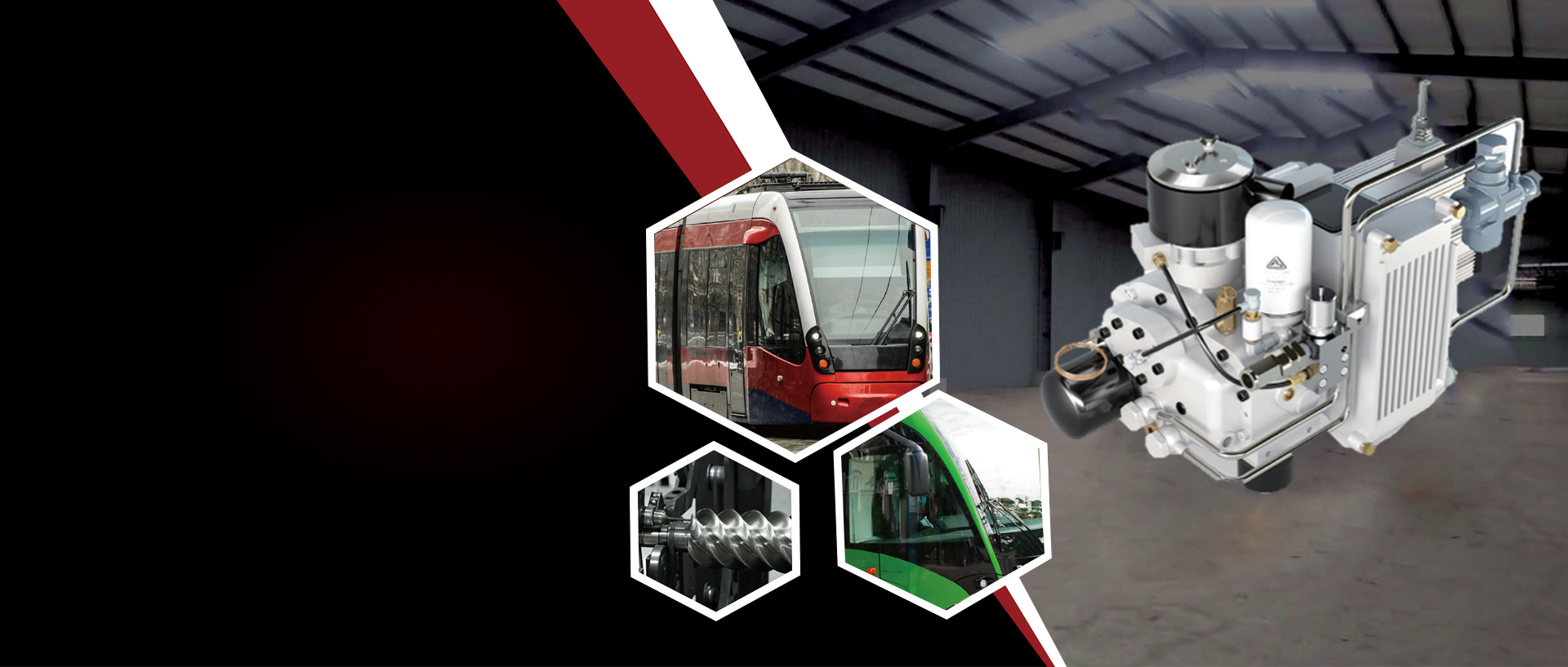
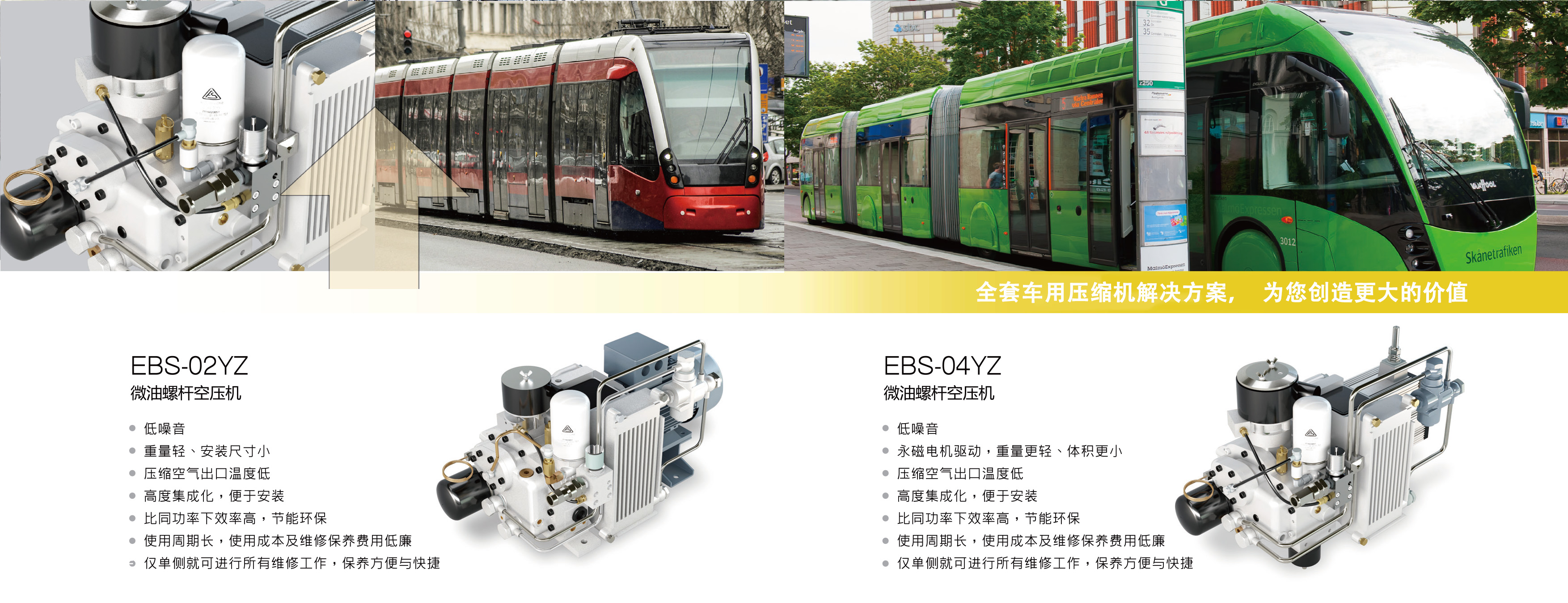
On public transport such as city buses and rail vehicles, compressed air handles critical functions: braking, door opening and closing, air suspension, and more. Unlike a fixed compressor station in a factory, an onboard air source must contend with tight space, vibration, frequent start-stop cycles, and long continuous operation, placing especially strict demands on reliability and maintainability.
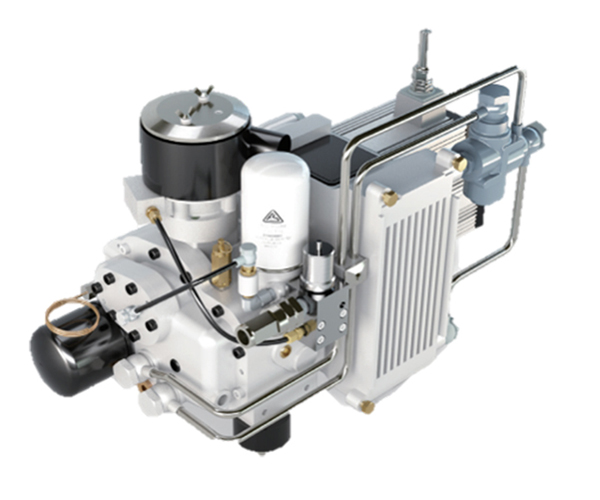
The Fusheng EBS series screw air compressor adopts a modular design philosophy, and its development and manufacturing processes are a system engineered specifically to meet the strict requirements of public transport authorities. The series has a working pressure of 1.0-1.2 MPa, air delivery of 0.24-0.4 m³/min, and power from 2.2 to 4.6 kW — a compact machine with low delivery and high pressure.
A factory compressor station can have a dedicated room, piped lines, and staff on inspection rounds; an onboard air source has none of that. It usually has to meet several conditions:
These constraints mean that a compressor for public transport cannot simply follow the thinking behind an ordinary industrial model; trade-offs have to be made at the design stage according to actual operating conditions. Operators also focus on different things than factories: they care more about availability across the whole life cycle and maintenance cost, not just the initial purchase price.
The EBS series adopts a modular design philosophy. The value of modularity is not just ease of assembly; it shows up in several ways:
With the higher discharge pressure of 1.0-1.2 MPa, the EBS series meets a vehicle's pneumatic system pressure requirements at a small air delivery — which explains the application logic behind its low-delivery, high-pressure specification.
By power range, the EBS series is a low-power machine with modest unit consumption, suited to serving as a dedicated air source for a vehicle or a small system. The combination of 0.24-0.4 m³/min air delivery and 1.0-1.2 MPa pressure points to the typical onboard air demand where pressure comes first and flow only needs to be adequate.
In application terms, this kind of low-delivery, high-pressure model plays the role of a dedicated air source rather than plant-wide centralised supply. Its value lies not in how much air it produces, but in being available at any time and wherever the vehicle goes — the air source travels with the vehicle, with no reliance on ground facilities.
For a user, deciding whether this type of model is needed comes down to confirming three things: the working pressure the pneumatic system requires, the system's actual air consumption, and the installation space and interface conditions. Only when all three match will the unit perform steadily.
Public transport runs at high intensity with short depot turnaround. When a compressor needs repair, the maintenance window is often limited to the night or a brief gap in service. Ease of maintenance is therefore not merely a question of the technician's experience; it bears directly on vehicle availability and operating cost.
This is where another layer of value in modular design lies: clear structural zones and high parts commonality mean routine inspection and replacement can be done faster, cutting vehicle downtime. For bus and rail operators, this maintainability often matters more than a little extra headroom on a specification sheet.
Spare-parts supply and after-sales response speed also deserve attention. Public transport operators generally want critical parts on hand quickly, to avoid long downtime while waiting for spares — something that should be clarified at the selection stage.
| Item | Specification |
|---|---|
| Working pressure | 1.0 ~ 1.2 MPa |
| Air delivery | 0.24 ~ 0.4 m³/min |
| Power range | 2.2 ~ 4.6 kW |
| Product type | Screw air compressor |
| Design philosophy | Modular design |
| Application | Air supply for public transport systems |
A compressor for public transport does not chase extreme specifications; it chases steady, long-term operation in a limited space. With modular design as its frame, the EBS series answers public transport authorities' twin demands for compactness and reliability through its 1.0-1.2 MPa pressure and 2.2-4.6 kW positioning. For an onboard air source, lasting long and repairing fast is performance in the most concrete sense.
This product is configured to order for the actual working conditions. For detailed specifications, please call our service hotline on 400-820-8795 or contact us for selection data.
Give us your working pressure, air demand and site conditions, and we will confirm the model and configuration