
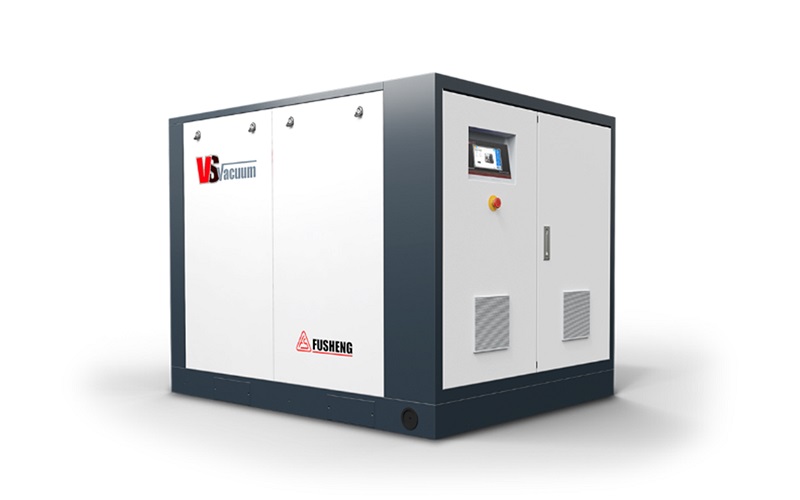
In industries such as electronics, new energy, glass, ceramics, CNC, food, thermoforming, medical, printing, chemicals, pharmaceuticals and paper, vacuum is a basic condition for many processes: vacuum handling, vacuum degassing, forming and packaging all depend on a stable vacuum source.
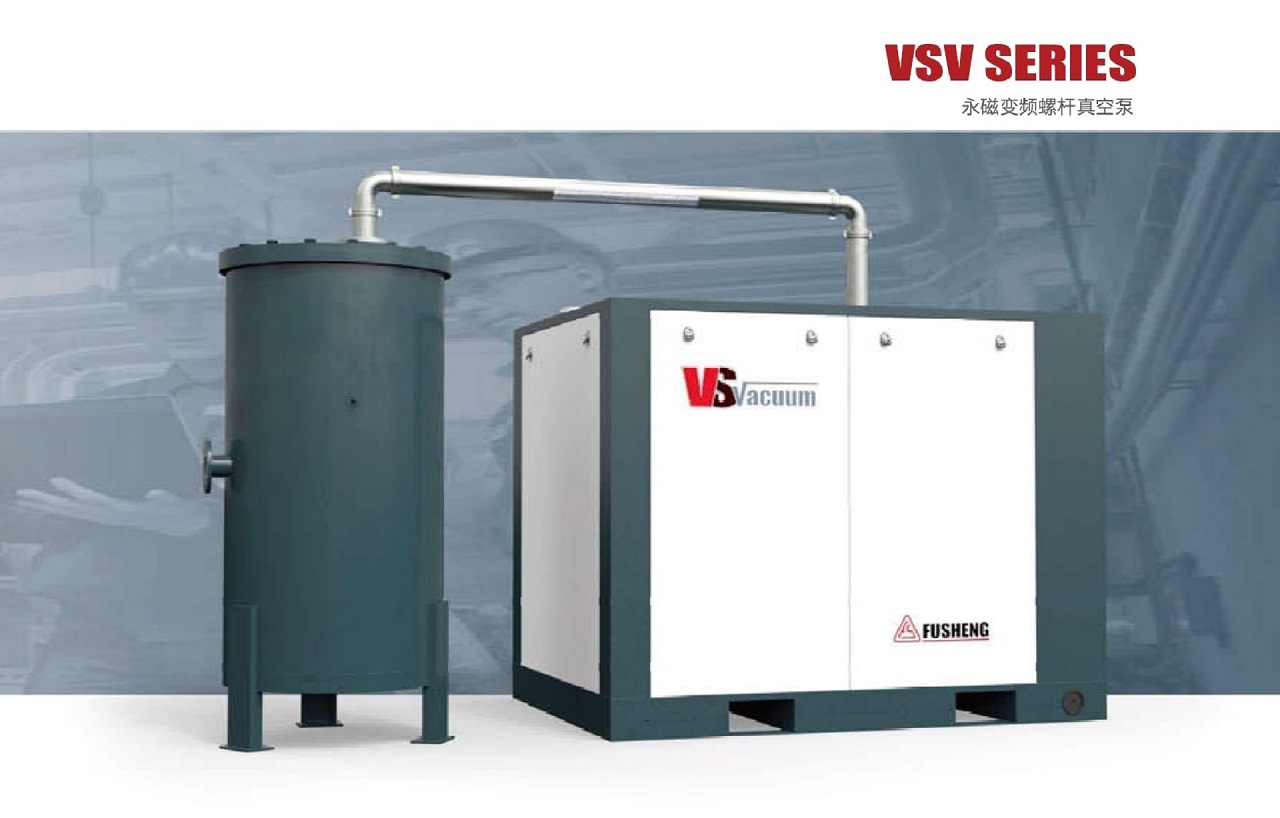
The Fusheng VSV Series PM VSD screw vacuum pump uses a dedicated profile design in its airend, with a directly driven permanent magnet motor and VSD control. It covers 7.5–22 kW and a suction capacity of 570–1260 m³/h, balancing efficiency and noise.
Traditional ways of producing vacuum each have their limits: water-ring pumps consume water and are troublesome to maintain, rotary vane pumps need regular oil changes, and Roots pumps often need a backing stage. A screw vacuum pump uses a pair of intermeshing screw rotors to draw in, compress and discharge gas. It is compact, runs smoothly and can work continuously for long periods, making it suitable as an always-on piece of equipment on a production line.
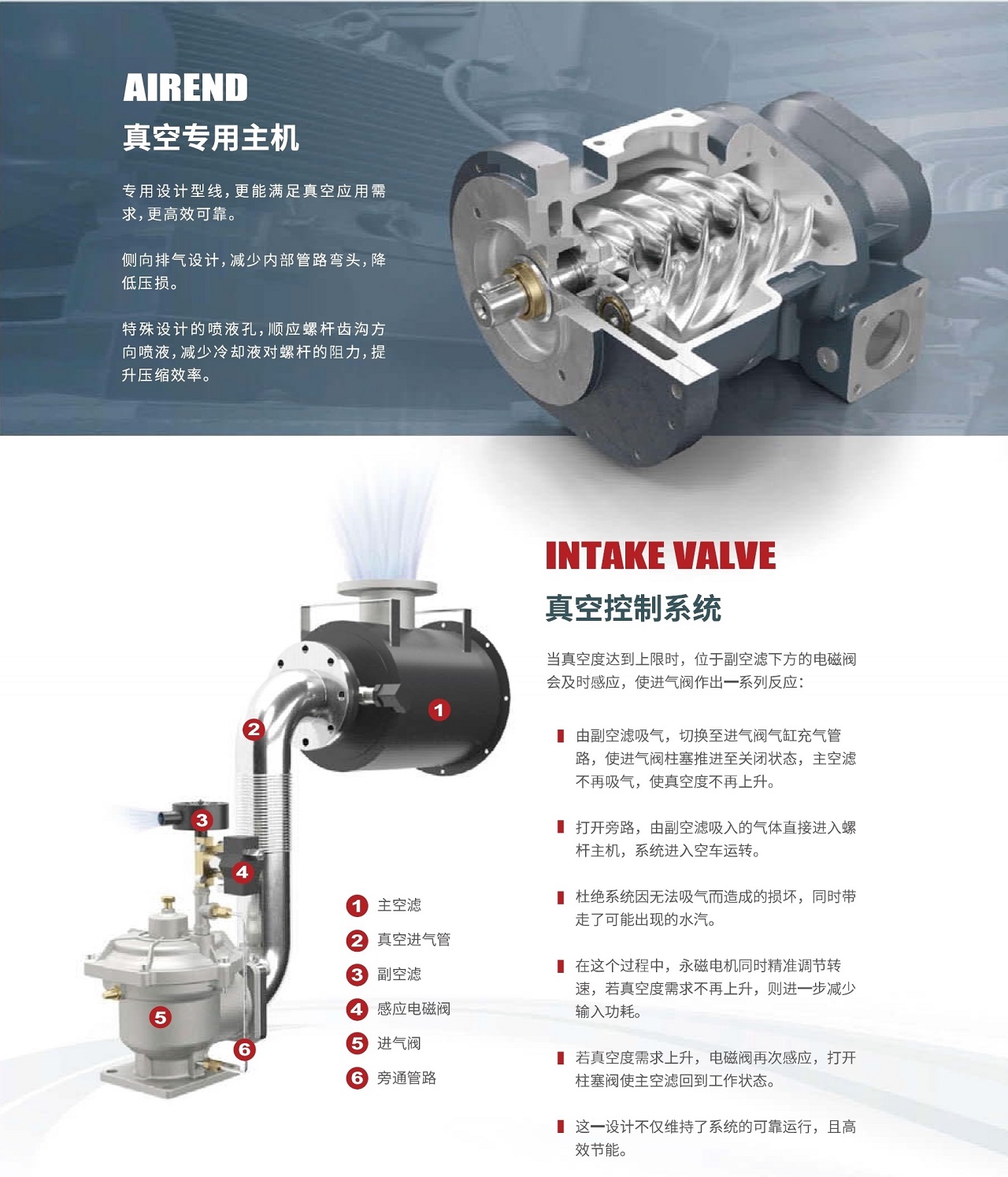
The VSV Series airend uses a dedicated profile design that maintains suction capacity while balancing operating efficiency and stability.
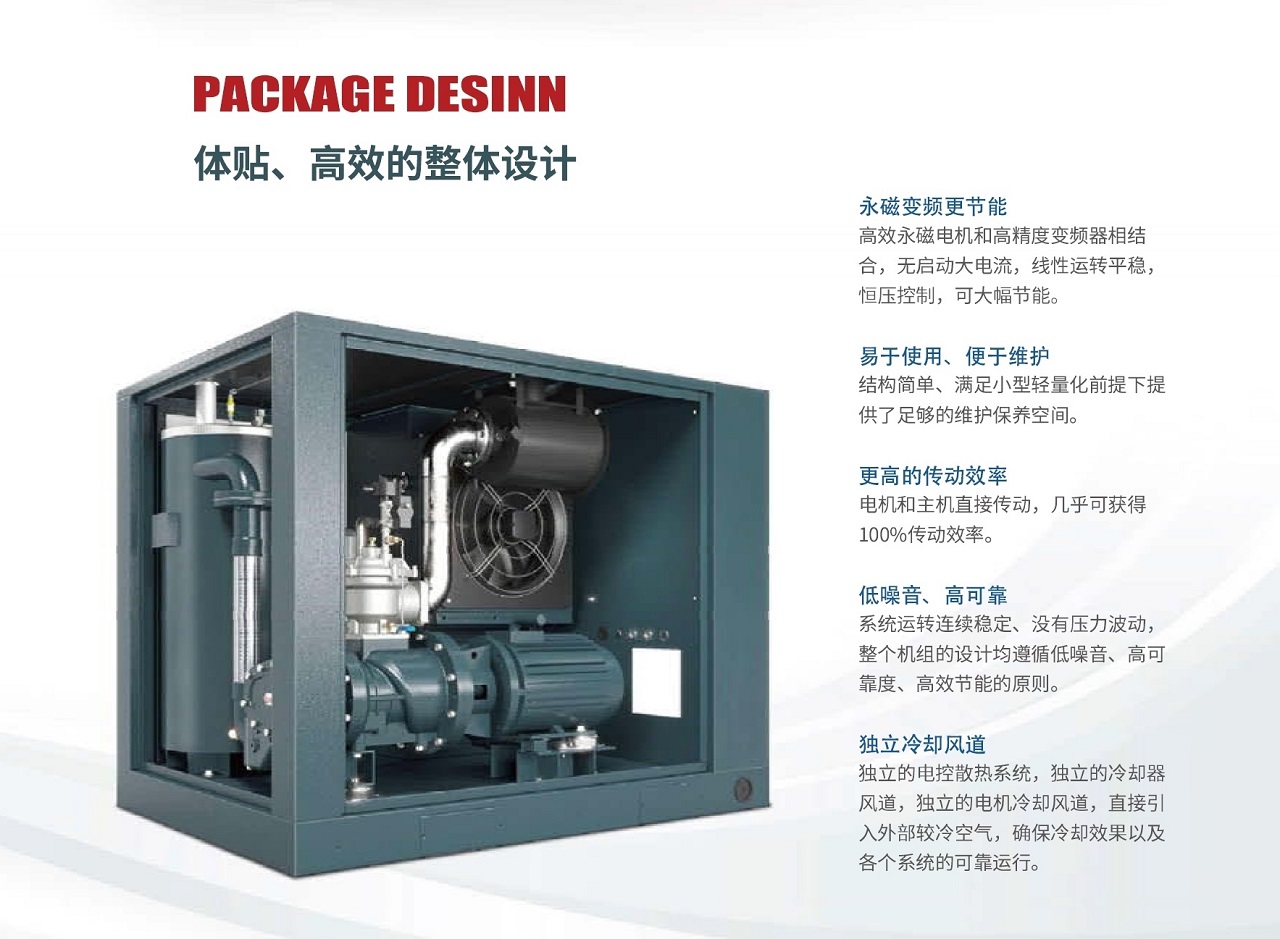
Many vacuum pumps use a belt or gear drive between the motor and the airend, and every intermediate link brings energy losses and a maintenance point. The VSV Series drives the airend directly with a high-efficiency permanent magnet motor, giving a shorter power path and higher efficiency, and doing away with daily maintenance such as belt ageing, tensioning and replacement.
Another advantage of the permanent magnet motor is efficiency: it generates less heat at the same power, and with sensible cooling design it can support long, continuous operation.
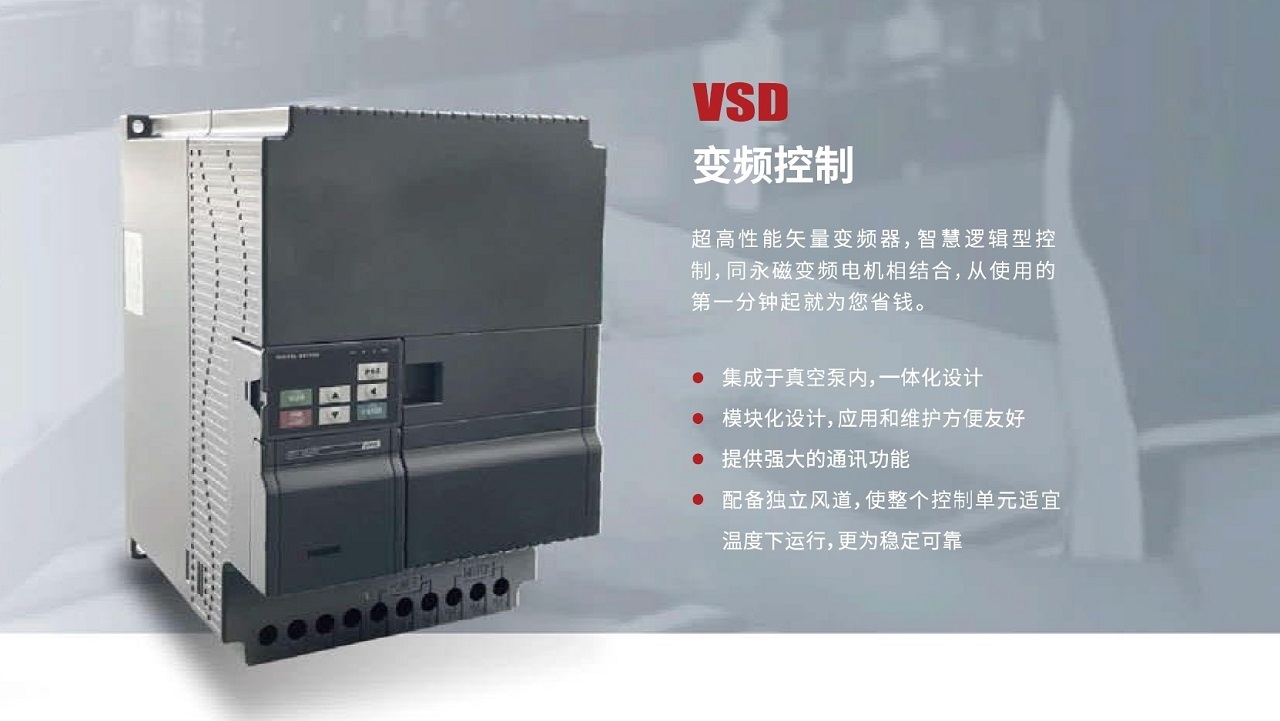
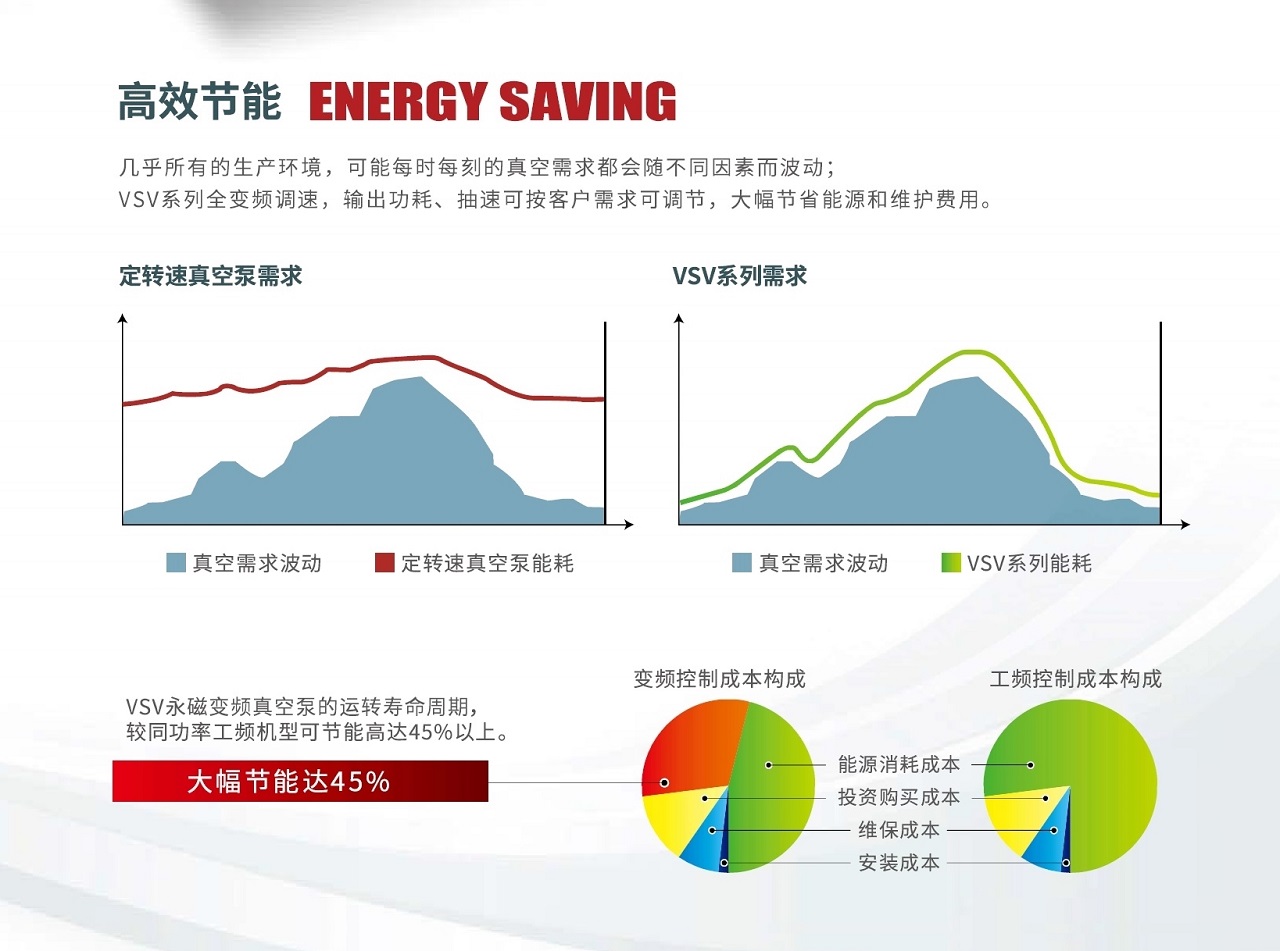
In production, vacuum demand is not constant. A conventional fixed-speed pump can only respond through valve adjustment or by starting and stopping, which tends to waste energy and cause vacuum fluctuation. The VSV Series uses VSD control, with speed adjusted to actual demand: it speeds up when high suction is needed and slows down when demand falls, reducing no-load losses and keeping the vacuum steadier.
For a continuously running production line, the energy savings from VSD accumulate over long operating hours.
Screw rotors run smoothly with little airflow pulsation, and combined with the direct-drive PM structure, the VSV Series is quieter overall than conventional models and friendlier to the workshop environment. The compact body and standardised interfaces also make it easy to install or retrofit on an existing line.
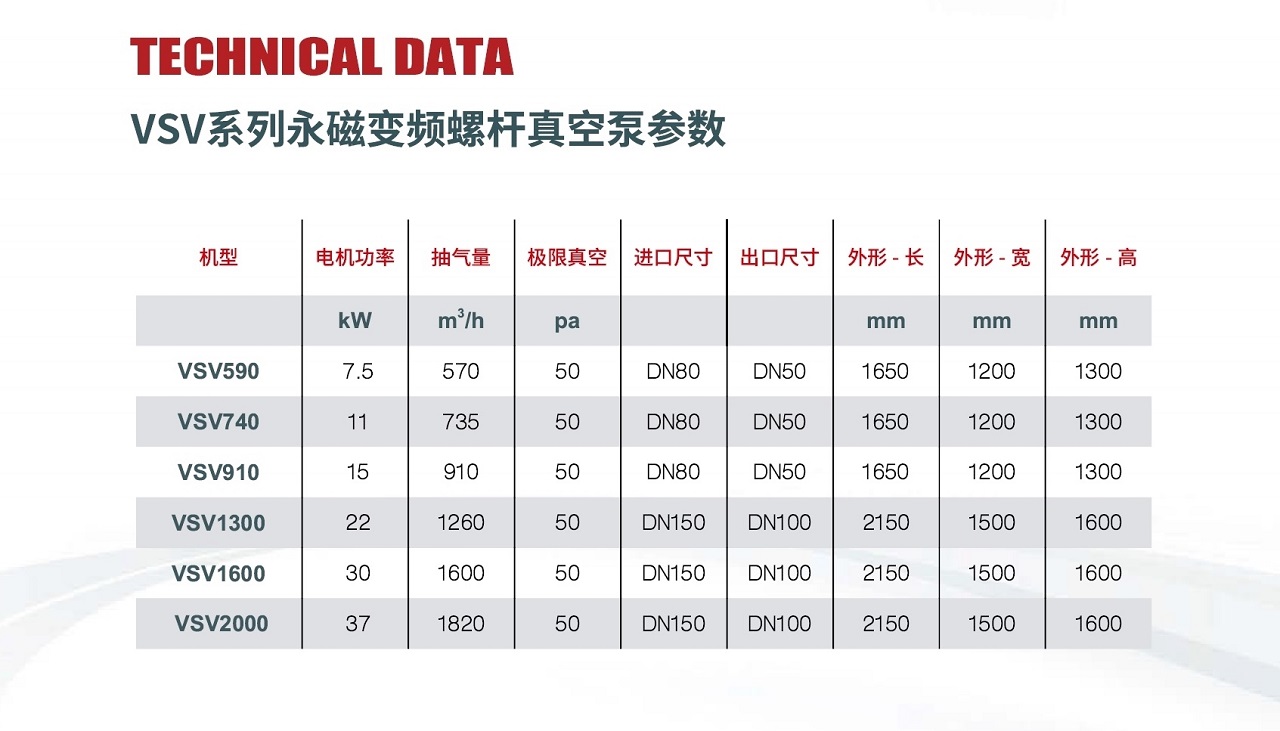
The specification table shows that the VSV Series covers several models from VSV590 to VSV1300, with inlet sizes from DN80 to DN150, so users can match a model to their suction capacity and piping specification.
| Item | Specification |
|---|---|
| Product type | PM VSD screw vacuum pump |
| Motor power | 7.5–22 kW |
| Suction capacity | 570–1260 m³/h |
| Ultimate vacuum | 50 Pa |
| Inlet size | DN80 / DN150 |
| Outlet size | DN50 / DN100 |
| Representative models | VSV590, VSV740, VSV910, VSV1300 |
A vacuum pump is often equipment that keeps running on the line but gets little attention, yet its energy consumption and stability directly affect production. With direct-drive PM and VSD control, the VSV Series raises both efficiency and smoothness of operation, offering a low-hassle, energy-saving vacuum solution across many industries in the 7.5–22 kW range.
| Model | Motor Power | Suction Capacity | Ultimate Vacuum | Inlet Size | Outlet Size | Length | Width | Height |
|---|---|---|---|---|---|---|---|---|
| kw | m"l/h | pa | mm | mm | mm | |||
| VSV590 | 7.5 | 570 | 50 | DN80 | DN50 | 1650 | 1200 | 1300 |
| VSV740 | 11 | 735 | 50 | DN80 | DN50 | 1650 | 1200 | 1300 |
| VSV910 | 15 | 910 | 50 | DN80 | DN50 | 1650 | 1200 | 1300 |
| VSV1300 | 22 | 1260 | 50 | DN150 | DN100 | 2150 | 1500 | 1600 |
| VSV1600 | 30 | 1600 | 50 | DN150 | DN100 | 2150 | 1500 | 1600 |
| VSV2000 | 37 | 1820 | 50 | DN150 | DN100 | 2150 | 1500 | 1600 |
Official specification charts for this product — click to enlarge
Give us your working pressure, air demand and site conditions, and we will confirm the model and configuration