

Wherever cutting fluid or cleaning agents are used, waste liquid is produced. In the past disposal was simple — fill a drum and have a licensed company haul it away. But as environmental requirements tighten and disposal fees rise, this "invisible cost" is growing heavier.
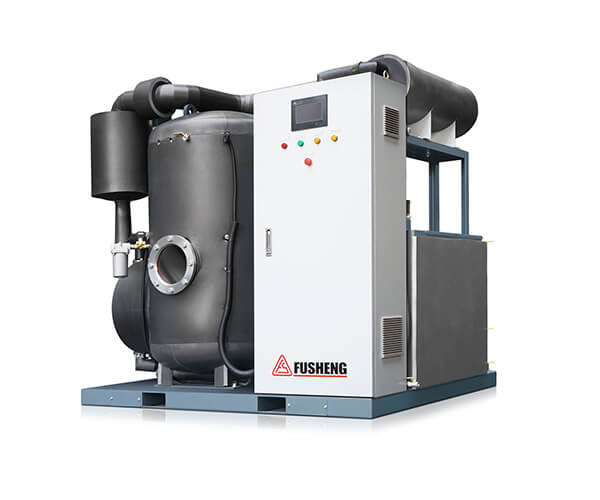
The Fusheng HD Series waste liquid reduction unit uses vacuum distillation to separate the water in the waste liquid and greatly shrink its volume, reducing it by over 90% at most, offering an "on-site reduction" approach for industrial waste liquids such as machining cutting fluid and cleaning waste.
Most of an industrial waste liquid is actually water. Take machining cutting fluid: after a period of use it has picked up metal chips, oil and impurities, but its water content is still high. Since most of it is water, the most economical approach is not to haul the whole drum away but to separate the water out first.
The HD Series uses vacuum distillation: under vacuum the boiling point of water is lowered, so the water evaporates at a lower temperature and is separated by condensation, and the remaining concentrate is greatly reduced in volume. For the company, the amount of waste liquid that must be sent out for disposal falls accordingly. In other words, the unit handles the largest fraction of the waste liquid, and the return on investment is often better than sending whole drums out for disposal directly.
Atmospheric distillation requires heating the liquid to a higher temperature, which consumes more energy and tends to degrade the organics in the waste liquid and cause scaling. Vacuum distillation lowers the boiling point by reducing pressure, and the benefit is a lower heating temperature: on one hand less energy is consumed, on the other the risk of scaling and degradation is reduced, making it better suited to industrial waste liquids of complex composition.
With a high-efficiency, low-energy design, the unit can process waste liquid continuously at relatively low running cost, suiting production lines that need long, stable operation. From an operating standpoint, vacuum distillation is a relatively gentle process with better tolerance for swings in waste liquid composition, and is not easily forced into frequent stops by changes in the material.
Waste liquid disposal cost is usually tied directly to volume — the unit price is charged by the tonne or by the drum, and transport, storage and filing are all counted by quantity. Cutting the volume to one tenth means the cost of outsourced disposal, transport and warehousing all fall together, and on-site temporary storage is easier to arrange.
For the company, this reduction brings not only lower cost but also greater ease in environmental management: with waste liquid generation held lower, the pressure of environmental compliance eases as well.
Note that reduction does not mean exemption from compliant disposal. The concentrated waste liquid still has to be handed to a licensed company in line with local requirements; what the reduction unit does is bring the total volume down so that disposal cost and management burden fall together.
| Item | Specification |
|---|---|
| Product type | Waste liquid reduction unit |
| Core technology | Vacuum distillation |
| Reduction | Up to over 90% |
| Operating features | High efficiency, low energy consumption |
| Suitable waste liquids | Industrial waste liquids such as machining cutting fluid and cleaning waste |
The cost of waste liquid disposal is often noticed only when an environmental inspection or a fee bill arrives. Rather than reacting after the fact, it is better to cut the volume at the source. The HD Series separates the water out of the waste liquid by vacuum distillation: reducing it by over 90% takes away not just volume but the company's disposal cost and compliance pressure.
This product is configured to order for the actual working conditions. For detailed specifications, please call our service hotline on 400-820-8795 or contact us for selection data.
Give us your working pressure, air demand and site conditions, and we will confirm the model and configuration