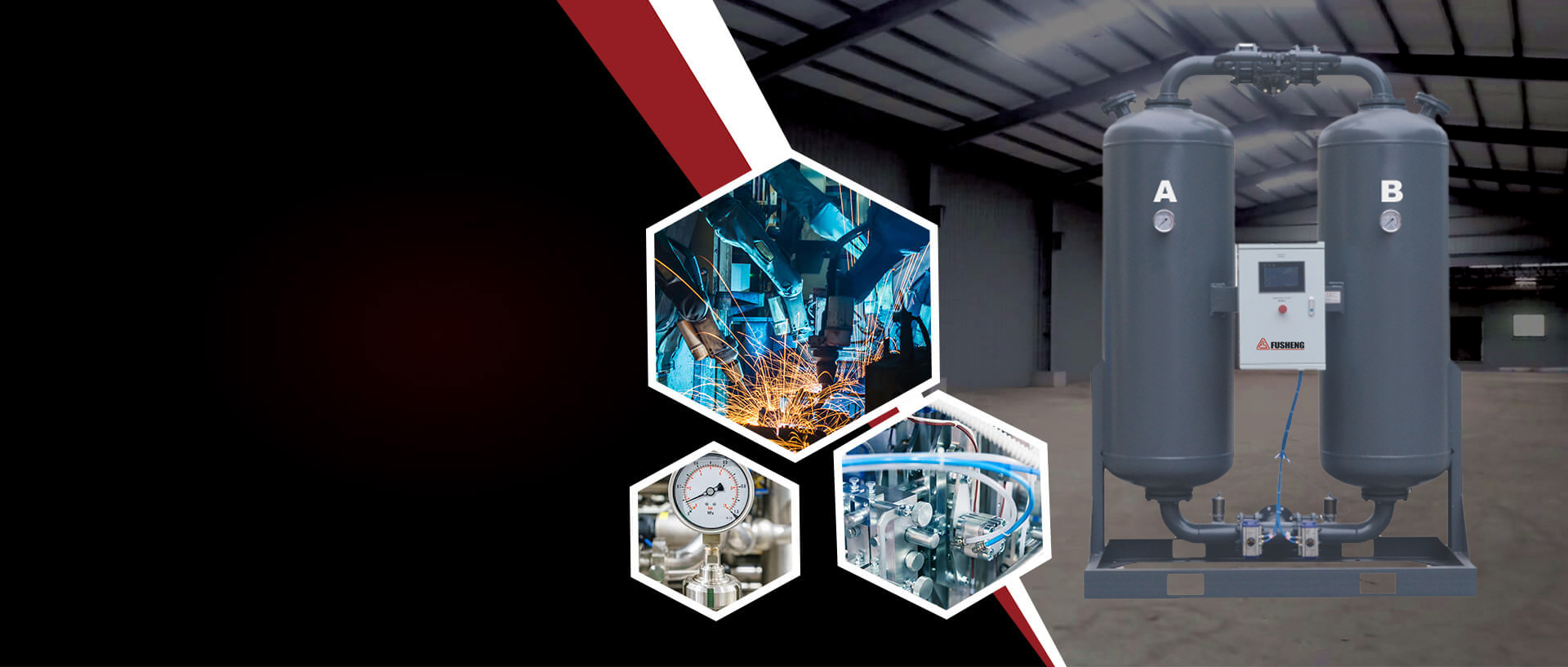
If the air is only feeding pneumatic tools, a refrigerated dryer is usually sufficient. But when the point of use is precision instruments, pneumatic control systems or spray equipment, or when the process itself has a defined dew-point requirement, the dew point a refrigerated dryer can reach may no longer be enough. What is needed then is desiccant drying, which lowers the moisture in compressed air further and avoids the risk of condensation and freezing in low-temperature environments.
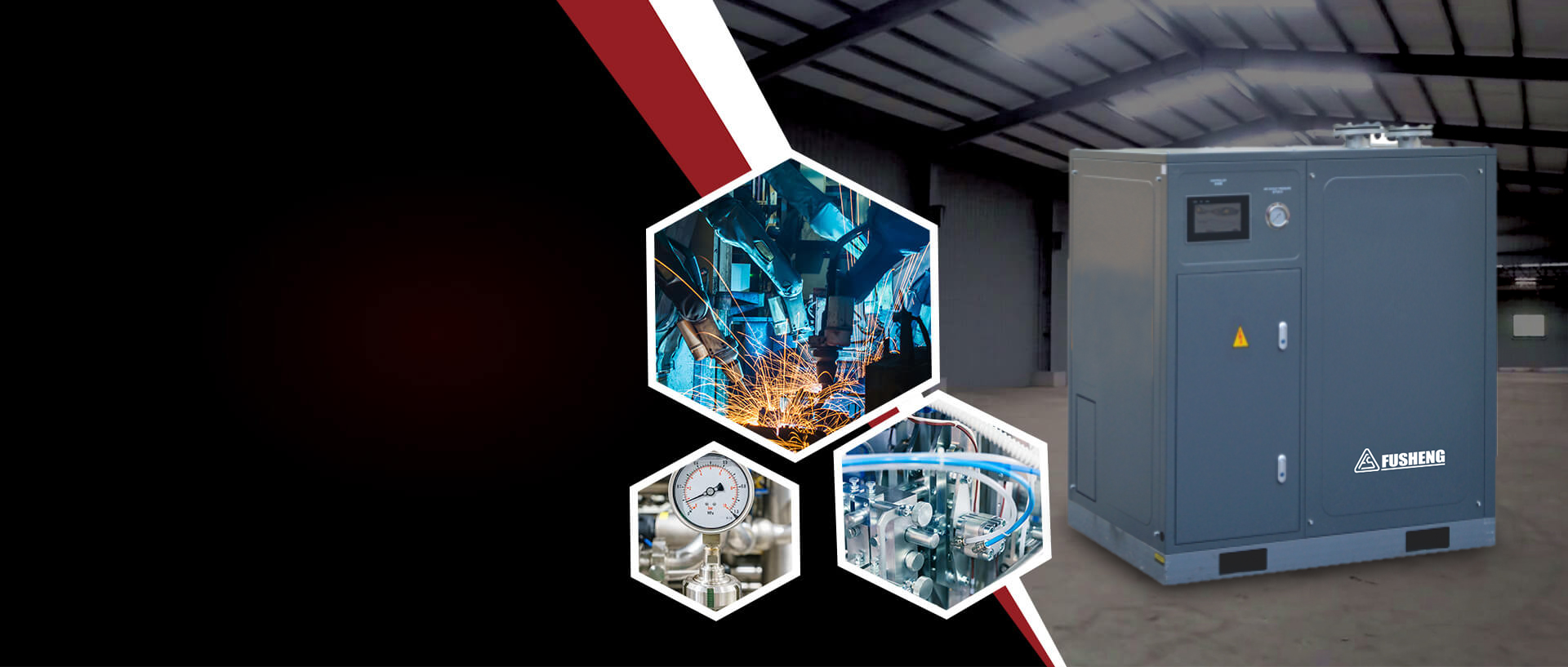
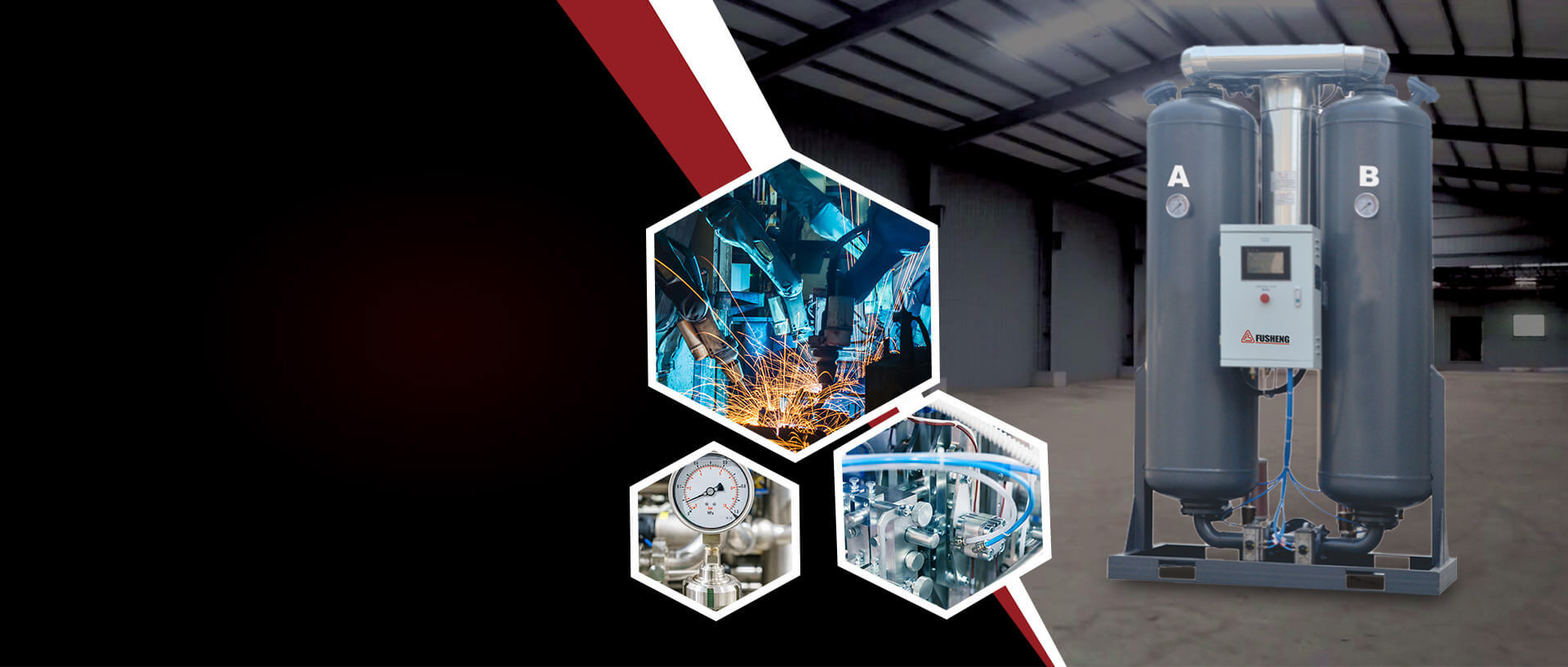
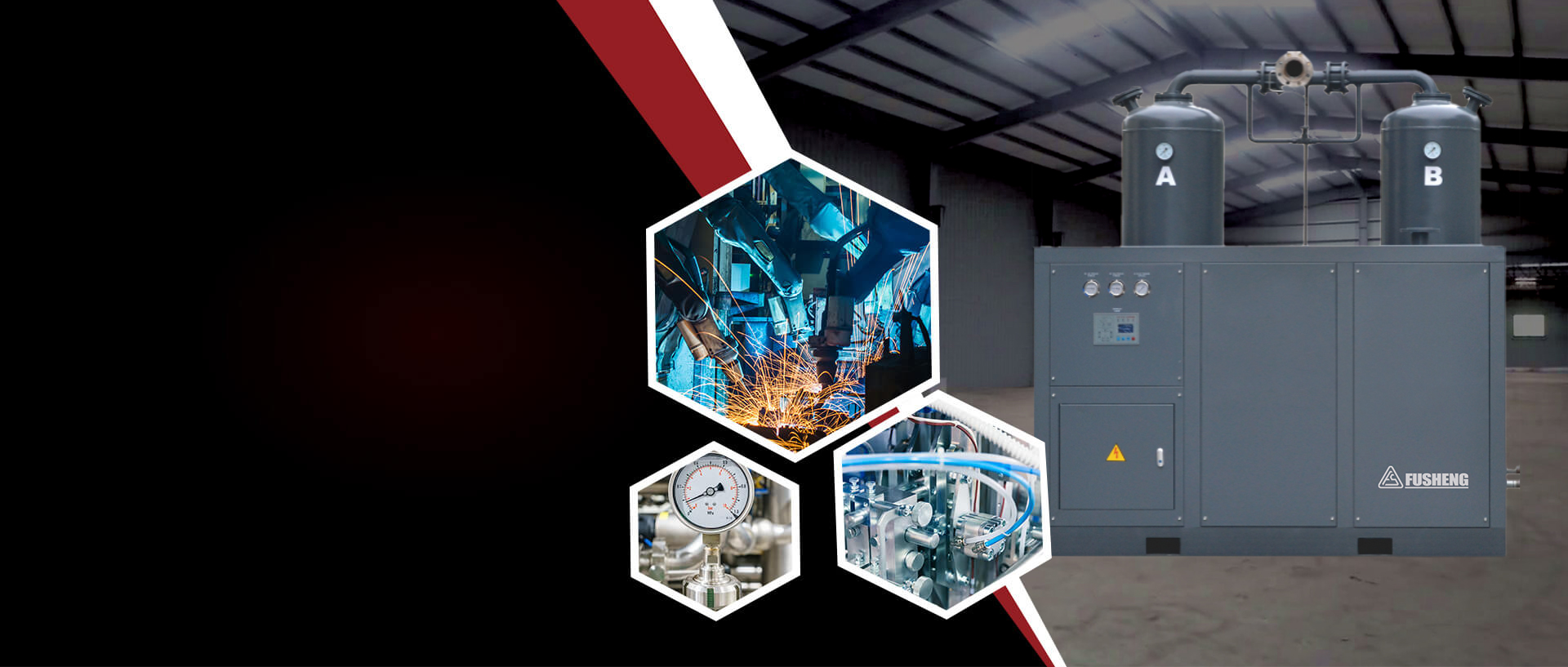
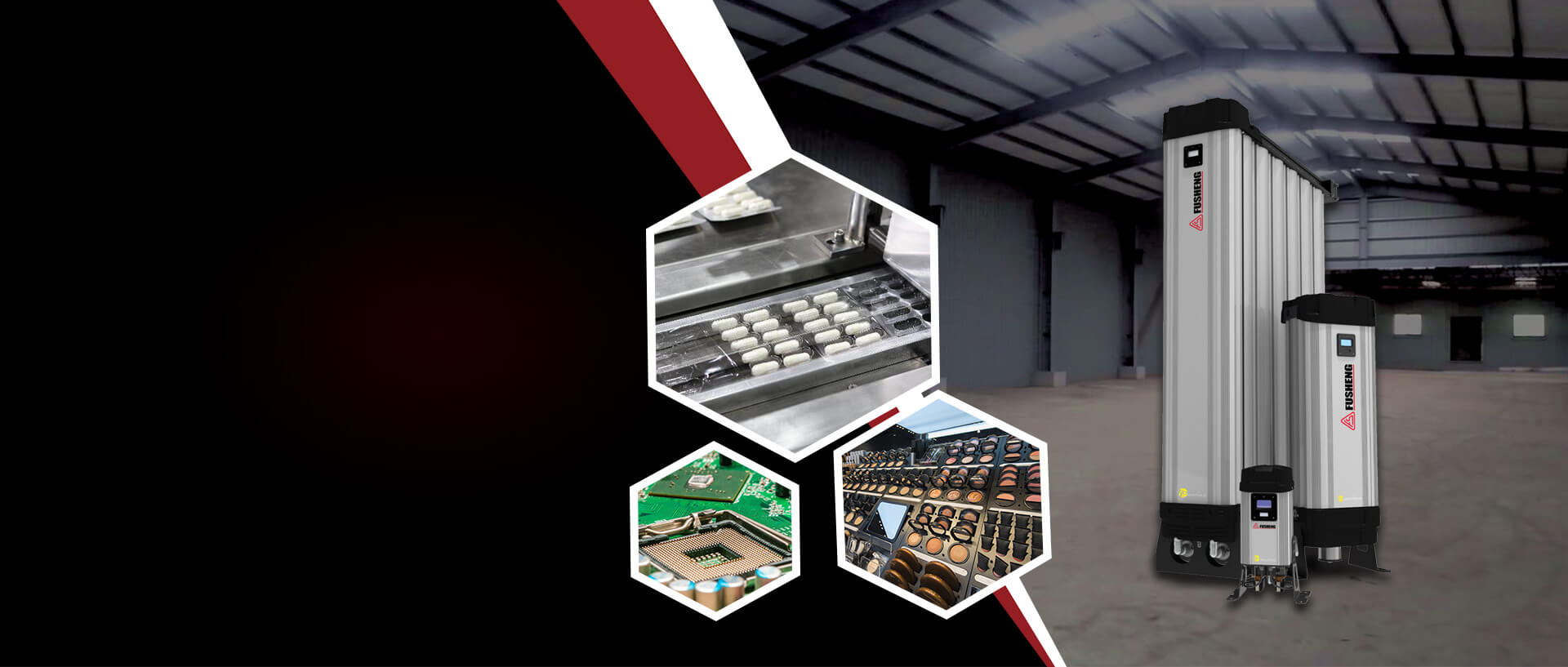
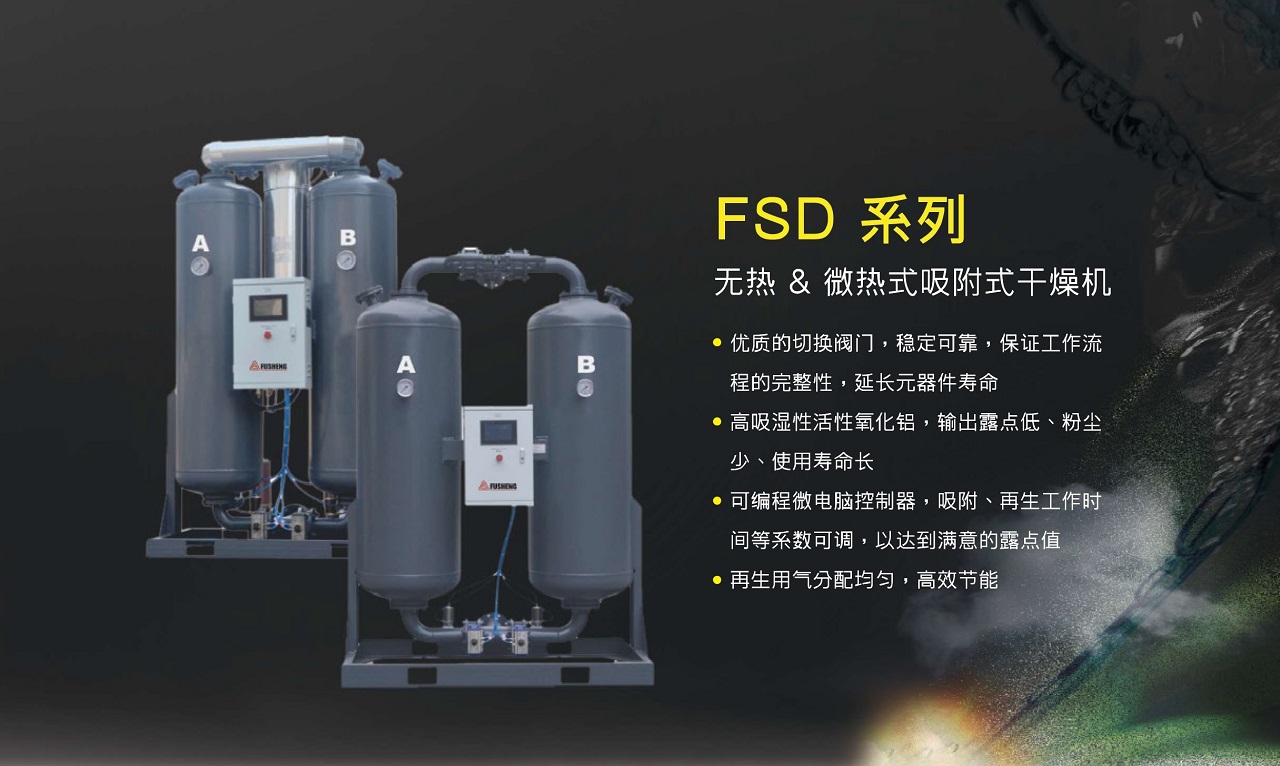
The Fusheng FSD heatless regeneration dryer covers a flow capacity of 1.2–90 m³/min and works by heatless regeneration (pressure swing adsorption). It is one of the simpler designs in the desiccant drying family, with controllable running costs.
A refrigerated dryer removes water by cooling and condensing it, and its dew point is limited by the refrigeration temperature — it cannot go arbitrarily low. What is more, once the ambient temperature falls below its pressure dew point, liquid water can form again in the piping. For outdoor lines, low-temperature workshops or processes with stricter air requirements, this risk is unacceptable. Desiccant drying relies on an adsorbent's ability to take up moisture and can reach a lower dew point, so it becomes a necessary choice where the demands are higher. The difference between the two is essentially a difference in the level of air quality required: refrigerated drying answers whether there is water, while desiccant drying answers whether there is little enough water. Understand that dividing line, and it becomes much easier to avoid over- or under-specifying.
In engineering practice, many users only add desiccant drying after a refrigerated dryer has proven inadequate, and often end up readjusting the piping and recalculating air volumes. Rather than fixing things afterwards, it is better to fix the target dew point at the design stage.
At the heart of desiccant drying is the adsorbent: as compressed air passes through an adsorption tower packed with desiccant, moisture is trapped by the adsorbent and the air leaving is dried. After adsorbing a certain amount, the desiccant becomes saturated and needs to be regenerated before it can keep working. Heatless regeneration, as the name suggests, adds no heat; instead, a portion of the already-dried compressed air is reduced in pressure and passed in reverse through the saturated tower, carrying the moisture away and venting it to atmosphere.
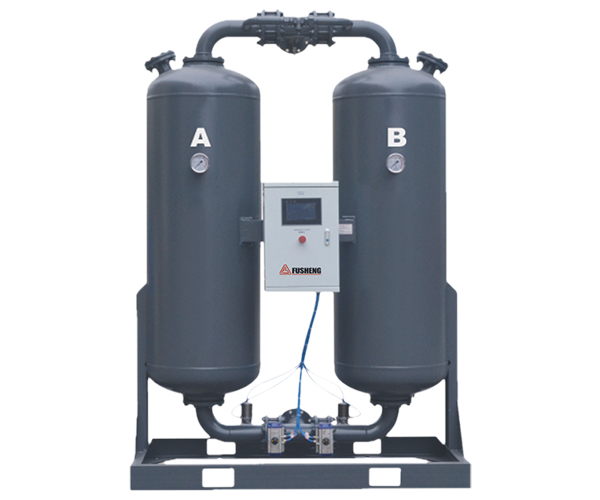
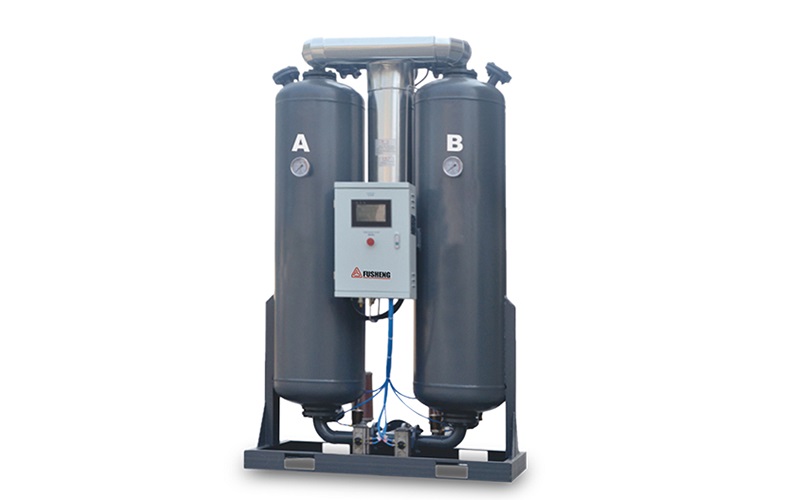
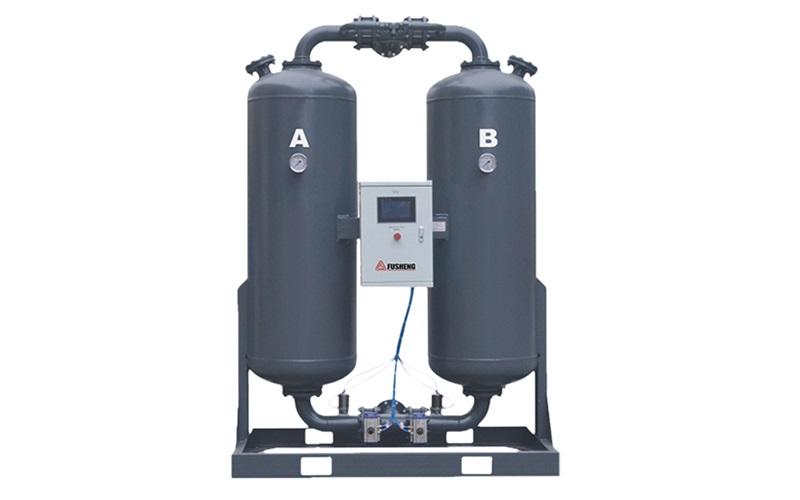
Because adsorption and regeneration alternate between two towers, the equipment usually uses a twin-tower design: one tower adsorbs while the other regenerates, switched on a timer by a valve group to provide a continuous air supply. The advantage of this method is a simple structure with no heating energy; the cost is that regeneration consumes a portion of the finished air, commonly called regeneration air loss.
To understand heatless regeneration, you have to understand its logic of trade-offs. It spends a portion of dried air to buy a lower dew point, which makes the air-loss ratio an important measure for this kind of equipment. When selecting, users need to weigh three things: first, how low a dew point the process actually needs — the more demanding the dew point, the greater the regeneration air loss usually is; second, whether the compressor has enough margin to make up for that loss, since sizing on rated air delivery can shrink the usable air noticeably; third, whether the inlet conditions are suitable, because a high inlet temperature adds to the load on the desiccant and shortens its life. Work these out clearly, and heatless regeneration delivers its value instead of becoming a case of saving power while using more air.
| Item | Specification |
|---|---|
| Model | FSD Series heatless regeneration dryer |
| Flow capacity | 1.2–90 m³/min |
| Regeneration | Heatless regeneration (pressure swing adsorption) |
| Representative models | FSD-10N to FSD-50N |
| Inlet / outlet size | G1 to G1 1/2 |
| Operation | Twin towers alternating adsorption and regeneration |
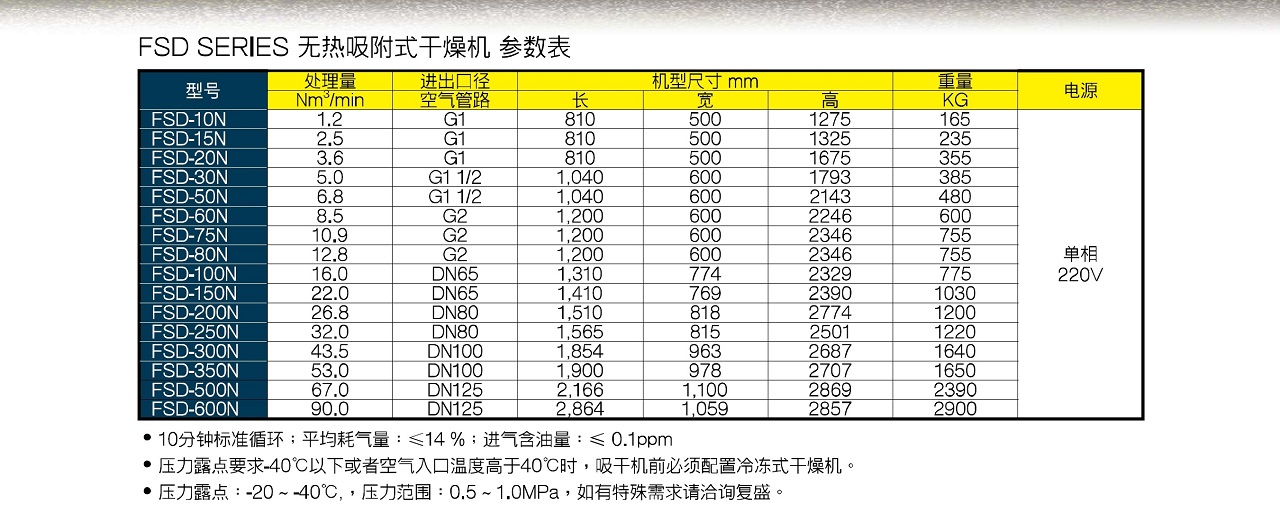
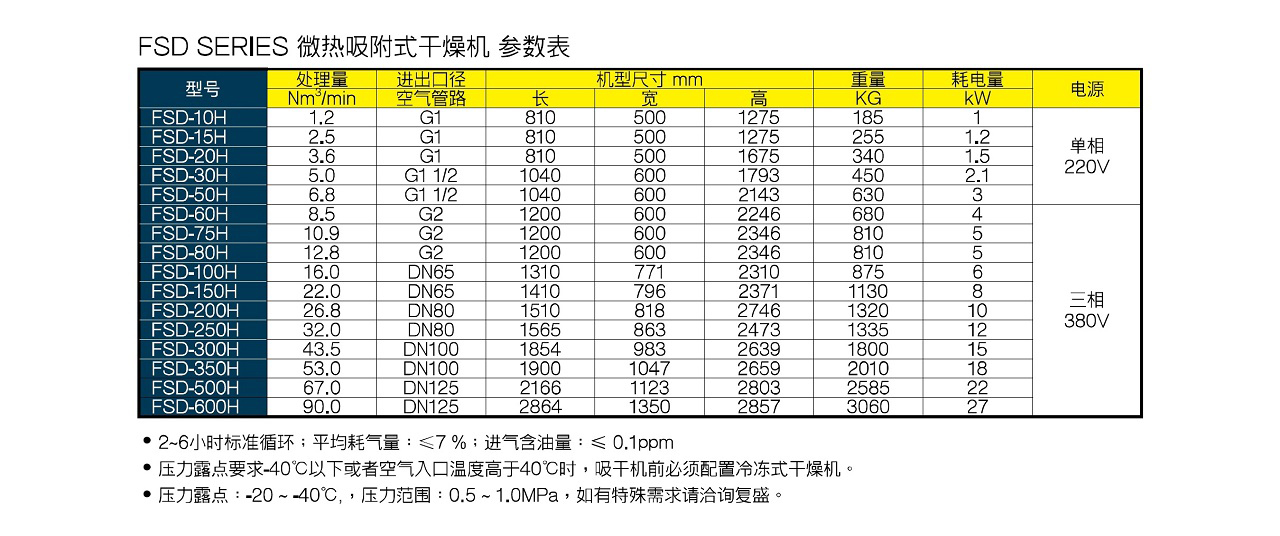
The table shows the FSD heatless regeneration series ordered by flow capacity from small to large, with the model suffix N denoting heatless regeneration units and inlet/outlet sizes stepping up from G1 to G1 1/2. The overall flow capacity range of 1.2–90 m³/min covers small air points as well as extending to mid-to-large air supply systems.
The value of desiccant drying is that it pushes air quality into a range a refrigerated dryer cannot reach. Heatless regeneration trades no heating and a simple structure for a lower dew point, and whether that pays off depends on the real dew-point requirement of the process. Covering 1.2–90 m³/min, the FSD heatless regeneration dryer offers a proven choice for this kind of need.
| Model | Capacity | Nm"/min | Air Piping | Inlet/Outlet Size | Dimensions mm | KG | Weight | Power Supply |
|---|---|---|---|---|---|---|---|---|
| FSD-10N | 1.2 | G1 | 810 | 500 | 1275 | 165 | ||
| FSD-15N | 2.5 | G1 | 810 | 500 | 1325 | 235 | ||
| FSD-2ON | 3.6 | G1 | 810 | 500 | 1675 | 355 | ||
| FSD-30N | 5.0 | G1 1/2 | 1040 | 600 | 1793 | 385 | ||
| FSD-50N | 6.8 | G1 1/2 | 1040 | 600 | 2143 | 480 | ||
| FSD-60N | 8.5 | G2 | 1200 | 600 | 2246 | 600 | ||
| FSD-75N | 10.9 | G2 | 1200 | 600 | 2346 | 755 | ||
| FSD-80N | 12.8 | G2 | 1200 | 600 | 2346 | 755 | Single Phase | |
| FSD-100N | 16.0 | DN65 | 1310 | 774 | 2329 | 775 | 220V | |
| FSD-150N | 22.0 | DN65 | 1410 | 769 | 2390 | 1030 | ||
| FSD-200N | 26.8 | DN80 | 1510 | 818 | 2774 | 1200 | ||
| FSD-250ON | 32.0 | DN80 | 1565 | 815 | 2501 | 1220 | ||
| FSD-300N | 43.5 | DN100 | 1854 | 963 | 2687 | 1640 | ||
| FSD-350N | 53.0 | DN100 | 1900 | 978 | 2707 | 1650 | ||
| FSD-500N | 67.0 | DN125 | 2166 | 1100 | 2869 | 2390 | ||
| FSD-600N | 90.0 | DN125 | 2864 | 1059 | 2857 | 2900 | ||
| 10-minute standard cycle; average air consumption ≤14%; inlet oil content ≤0.1 ppm | ||||||||
| ·Where a pressure dew point below -40 °C is required, or the air inlet temperature exceeds 40 °C, a refrigerated dryer must be installed upstream of the desiccant dryer. | ||||||||
| ·Pressure dew point: -20~-40 °C; pressure range 0.5~1.0 MPa. Please contact Fusheng for special requirements. |
Official specification charts for this product — click to enlarge
Give us your working pressure, air demand and site conditions, and we will confirm the model and configuration