
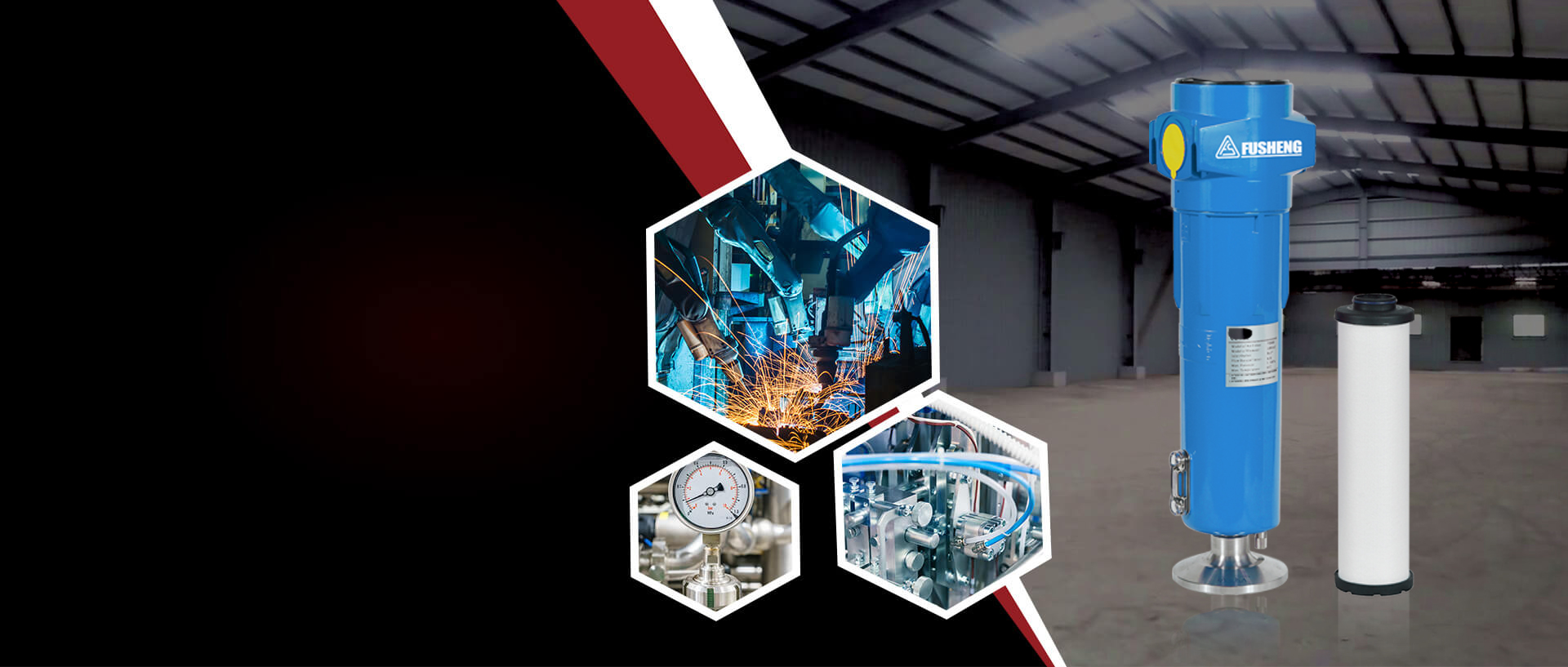
Compressed air is often called the fourth utility, but it does not leave the compressor clean: moisture, oil mist, dust and pipe scale all travel downstream with the flow. If these contaminants reach pneumatic tools, solenoid valves, instruments or the product itself, the consequences range from worn equipment and blocked nozzles to contaminated material and batch defects. That is why, at the end of an air system, the filter plays the role of the final checkpoint.
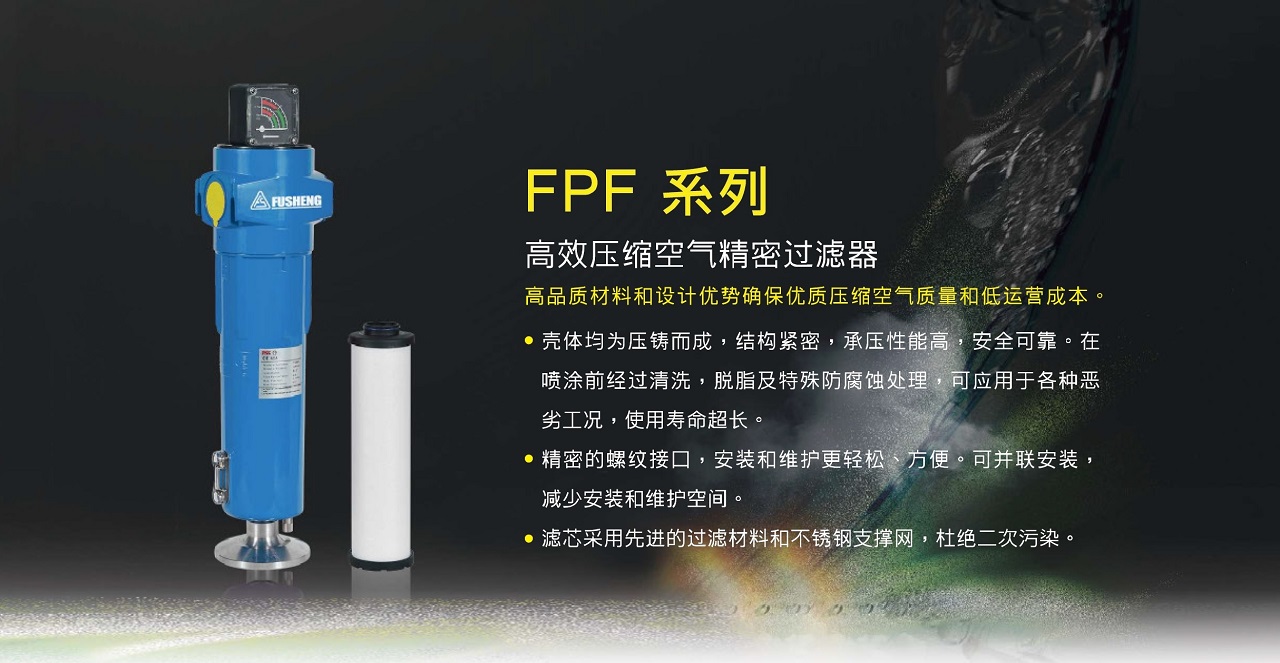
The Fusheng FPF precision filter covers 1~80m³/min, with connections from Rc 1/2 to Rc 1-1/2 and matching element types including L010, L020, L048 and L072, so it can be staged across different flow rates. It is a basic but critical piece of compressed air treatment equipment.
Air itself carries water vapour and dust, and compression raises their concentration further; a running compressor also carries over a small amount of oil; and over time the inner walls of piping and receivers corrode and shed particles. These contaminants take different forms — solid dust and scale, liquid condensate and aerosol oil mist — and they affect downstream equipment in different ways. Particles wear precision valves, moisture causes corrosion and icing, and oil mist can contaminate products and coatings. Air treatment therefore normally needs several stages working together rather than a single device.
Where the filters sit in the sequence matters too. The stage nearest the compressor usually handles bulk filtration, catching large amounts of liquid water and particles, and precision increases toward the point of use. The longer the piping and the damper the environment, the more thorough the intermediate stages should be, so that contaminants do not settle in the network only to be swept into the far end by the flow. A sound sequence lets every element work under the conditions it suits best, protecting both air quality and consumable life.
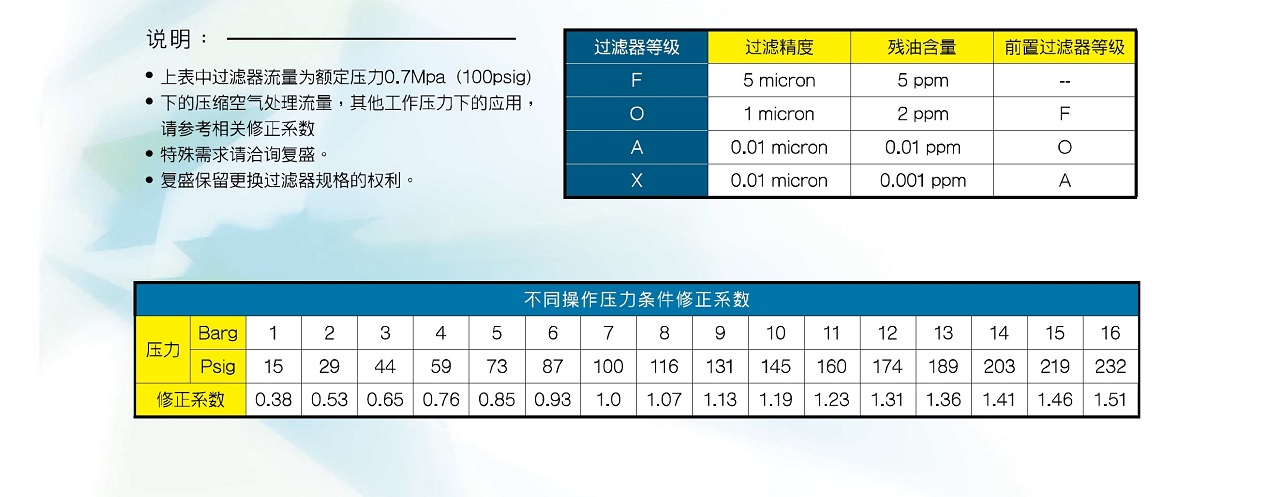
Precision filters are graded by filtration rating, stepping down contaminant levels from coarse filtration to ultra-fine. The important point is this: a higher rating is not automatically better — what matters is matching the grade to the need and staging the filters. A single high-precision element will quickly be blocked by large particles and liquid oil and water, driving differential pressure up and element life down. Catching large particles and bulk liquid at a coarser first stage and letting the fine stage do the final check gives better element life and lower system pressure loss. The FPF series offers several models and element ratings precisely so they can be combined to suit flow and precision requirements.
For users, the real cost of a filter is not just the purchase price but the element replacements and pressure loss over years of service. Elements are consumables and their replacement interval feeds straight into running cost, while housing and connection design determines how easy installation is, how reliable the seal is and whether pressure loss stays under control. Selection should therefore look beyond the rating to whether elements are easy to source and whether the housing is easy to service and replace. Only by counting these factors into lifecycle cost can you choose a filter you can genuinely afford to run.
| Item | Specification |
|---|---|
| Model | FPF series precision filter |
| Flow capacity | 1 ~ 80 m³/min |
| Connection | Rc 1/2 ~ Rc 1-1/2 |
| Element types | L010 / L020 / L048 / L072 |
| Representative models | FPF010 / FPF020 / FPF048 / FPF072 |
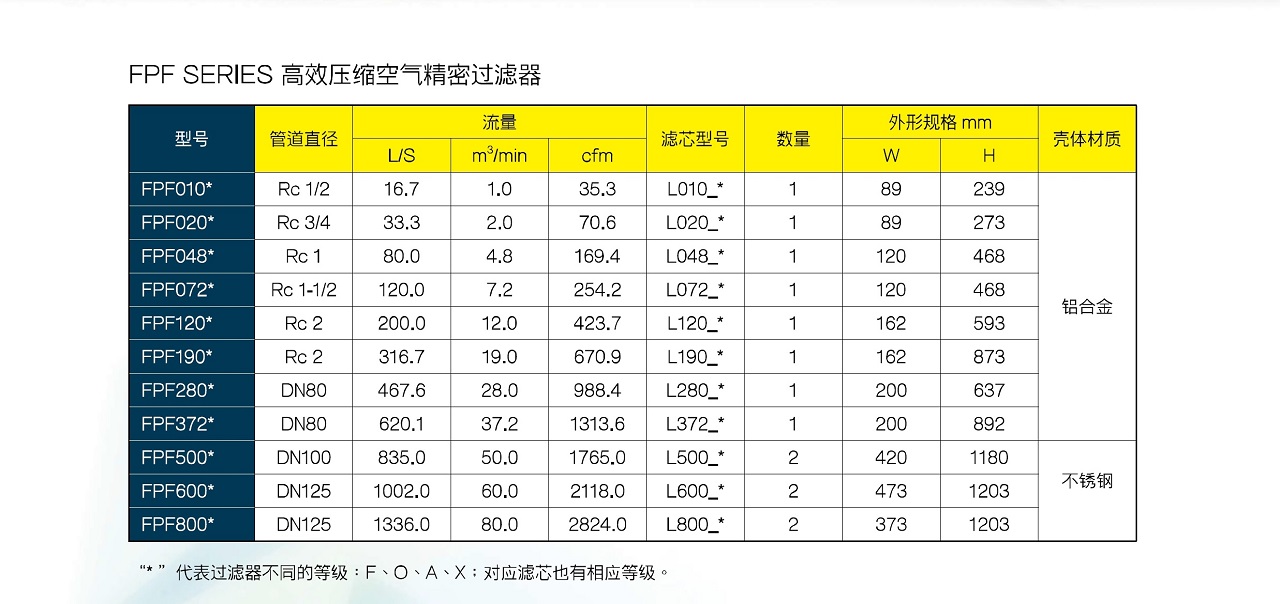
The table shows the FPF series arranged as a complete system from small to large flow: the smallest models use Rc 1/2 connections, and as capacity rises the connection steps up to Rc 3/4, Rc 1 and finally Rc 1-1/2, with the matching element types upgraded accordingly. This one-to-one mapping of model, connection and element means users can find a suitable size whether they are supplying a single small machine or a high-volume centralised system.
A filter is rarely the most conspicuous device in an air system, yet it is often where problems surface first. Holding the final checkpoint is usually far cheaper than the equipment repairs and product losses caused by contaminated air. With a systematic 1~80m³/min range, the FPF precision filter offers a basic and dependable choice for air systems of different sizes.
| Model | Pipe Diameter | Element Model | Quantity | Housing Material | ||||
|---|---|---|---|---|---|---|---|---|
| m/min | cfm | |||||||
| FPF010* | Rc 1/2 | 16.7 | 1.0 | 35.3 | L010_* | 89 | 239 | |
| FPF020* | Rc 3/4 | 33.3 | 2.0 | 70.6 | L020_* | 273 | ||
| FPF048* | Rc 1 | 80.0 | 4.8 | 169.4 | L048_* | 120 | 468 | |
| FPF072* | Rc 1-1/2 | 120.0 | 7.2 | 254.2 | L072_* | 120 | 468 | |
| FPF120* | Rc 2 | 200.0 | 12.0 | 423.7 | L120_* | 162 | 593 | |
| FPF190* | Rc 2 | 316.7 | 19.0 | 670.9 | L190_* | 162 | 873 | |
| FPF280* | DN80 | 467.6 | 28.0 | 988.4 | L280_* | 200 | 637 | |
| FPF372* | DN80 | 620.1 | 37.2 | 1313.6 | L372_* | 200 | 892 | |
| FPF500* | DN100 | 835.0 | 50.0 | 1765.0 | L500_* | 420 | 1180 | |
| FPF600* | DN125 | 1002.0 | 60.0 | 2118.0 | L600_* | 473 | 1203 | Stainless Steel |
| FPF800* | DN125 | 1336.0 | 80.0 | 2824.0 | L800_* | 373 | 1203 | |
| "*" denotes the filter grade — F, O, A, X — and the element is matched to the same grade. |
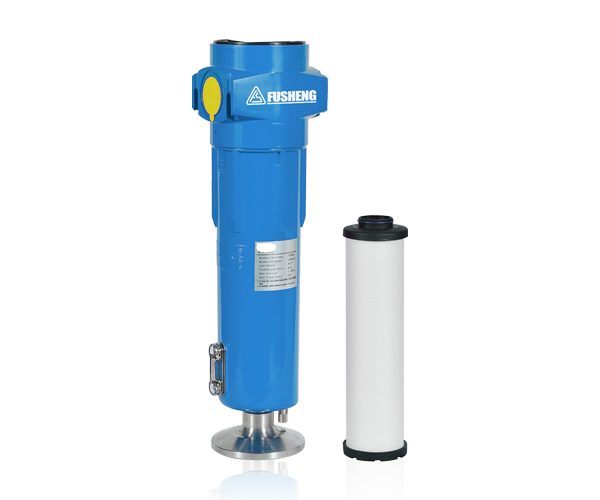
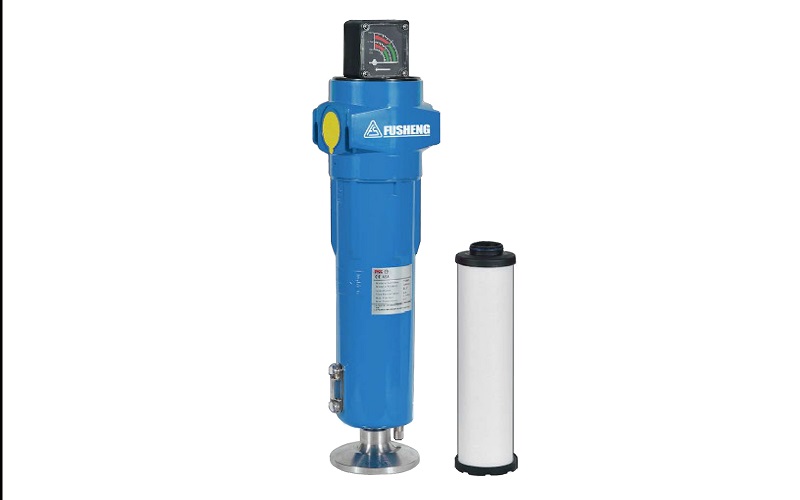
Official specification charts for this product — click to enlarge
Give us your working pressure, air demand and site conditions, and we will confirm the model and configuration